

Plyometric Anatomy Book Review

Summary
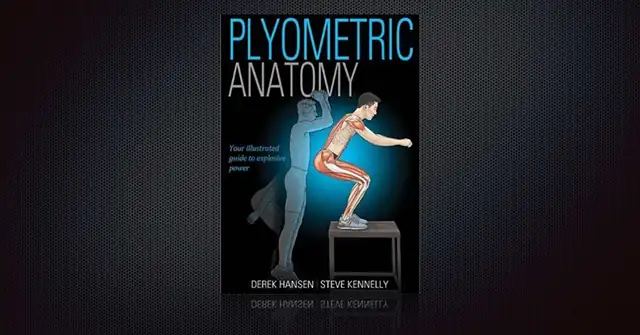
“Plyometric Anatomy,” by Derek Hansen and Steve Kennelly, provides the right balance between the written word, clear visuals, and scientific evidence to bring plyometric exercises to life and arm the reader with sufficient knowledge to develop their own explosive power training program.
We strength and conditioning coaches are all kings of our castles. We reign supreme over the weight room with an encyclopedic knowledge of the technicalities of barbell exercises, intensity, loading, and periodization models. There isn’t a strength coach out there who cannot get their athletes stronger. As the adage goes, it’s like falling out of a boat and finding water. The skill these days is in transferring these qualities, primed in the weight room, out onto the track, court, or field.
Enter plyometrics.
While most coaches can proficiently coach a squat or a power clean, the same universal competency in programming and instructing other training methods such as plyometrics does not exist.
The exponential growth of social media—and the evidence from many gyms and athletic tracks around the world—highlights the lack of knowledge, understanding, and ability to teach athletes to jump, land, exploit the stretch reflex, and effectively utilize ground reaction forces. Knee valgus collapse, hunched-over torsos, and circus trick box jumps are conclusive evidence of that fact.
Plyometrics may be the missing link between weight room strength and enhanced performance. Share on XWhile maximal (relative) strength is the physical quality that underpins all others, it is the ability to generate and apply force quickly—Power!—that interests most coaches and athletes. We can certainly tackle at least one half of the power equation with our barbells and dumbbells (power = force x velocity). However, the defining characteristic in most sports is not merely the ability to generate brute force. For many athletes and coaches, plyometrics may prove to be the missing link between weight room strength and enhanced sporting performance.
Real, Practical Applications Instead of Scientific Concepts
I was fortunate enough to recently acquire a copy of Derek Hansen’s new text, “Plyometric Anatomy,” written in conjunction with Steve Kennelly. In the book, the authors promise to provide an “illustrated guide to explosive power.” While many books in the sports science and strength and conditioning fields are restricted, or hampered, by a necessity to accurately (and in great detail) explain various scientific principles and concepts, often leading to a dull and laborious read, “Plyometric Anatomy” aims more towards practical application.
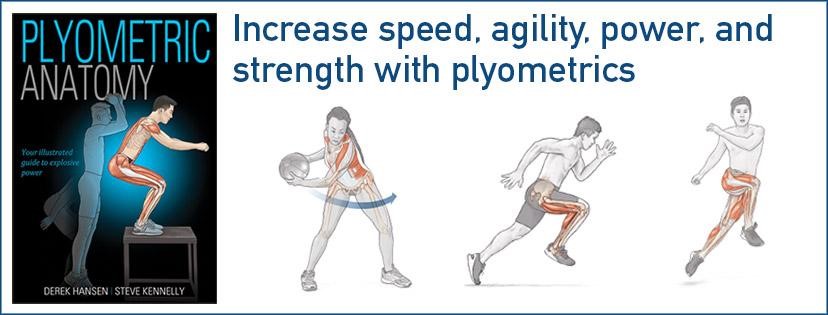
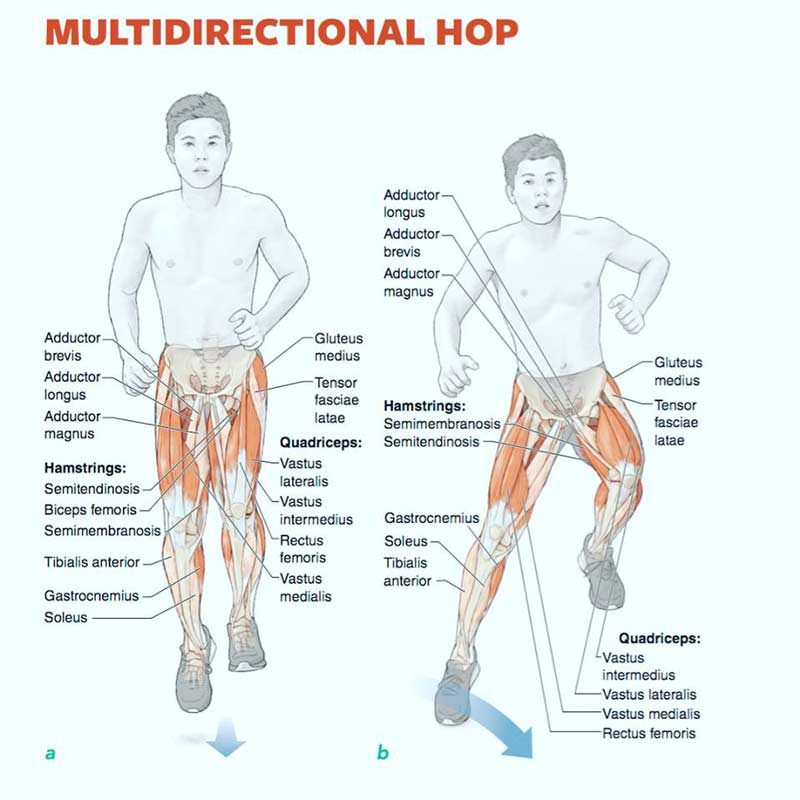
Clear and detailed drawings accompany each of the exercises presented in the book, supported by simple and easy-to-understand descriptions of idealized technical execution. The authors expand upon this with a comprehensive list of the major muscle groups recruited, arming the reader and coach with the knowledge necessary to incorporate the various plyometric exercise categories or individual movements into their training programs.
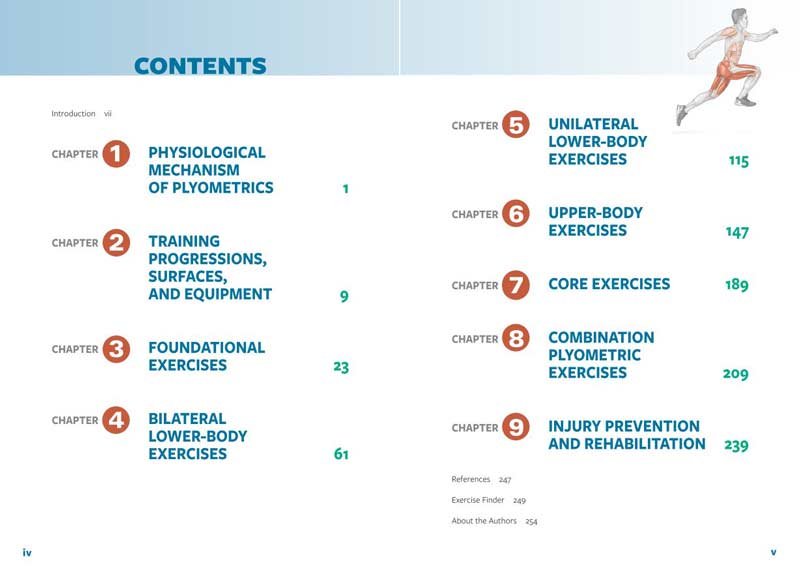
“Plyometric Anatomy” is a professionally written and presented manual. After the opening chapters provide a brief, yet thorough, history of plyometric training and the science that underpins plyometric performance, the book outlines some basic health and safety, flooring, and equipment considerations before quickly jumping into the foundational plyometric movements. From there, a logical and systematic progression of movements unfolds as “Plyometric Anatomy” presents a comprehensive library of plyometric activities.
Hansen and Kennelly break down a full repertoire of plyometric movement classifications and a wide variety of example exercises that fit into each category.
As previously alluded to, many coaching and sports science texts suffer from the compulsion to include lengthy scientific arguments and descriptions to accurately support their recommendations, when perhaps brevity and colorful illustration would provide a more reader-friendly experience. While there is no substitute for practical experience and experimentation, “Plyometric Anatomy” provides the right balance between the written word, clear visuals, and scientific evidence to bring plyometric exercises to life and arm the reader with sufficient knowledge to develop their own explosive power training program.
A major bonus of many of the exercises presented in this text by Hansen and Kennelly is that, while many of the standard exercises in the average strength and conditioning coach’s armory require significant amounts of expensive equipment, most exercises described in “Plyometric Anatomy” require nothing more than your own body—or, at most, a set of stairs, a box, or a medicine ball—allowing the athlete or coach great variety in developing explosive power.
A Valuable Manual, Plus a Bonus Chapter
In researching and writing the book, the authors generated a vast amount of high-quality content. So, in the interest of keeping the manual to a manageable size, they omitted some information from the final printing of the product. As a special promotion, Derek Hansen and Steve Kennelly have made available the additional information in the form of a chapter titled “Integrated Planning and Program Design.” Individuals who purchase or have purchased “Plyometric Anatomy” and share a photo of themselves with their copy of the book are eligible to receive a copy of this bonus material. Hansen and Kennelly explain that the intent of the additional material is to provide readers with guidelines on the implementation of the various exercises illustrated in “Plyometric Anatomy.”
“Plyometric Anatomy” is already a good value for the money without the bonus chapter. However, the availability of this additional material further enhances the value of this manual. The additional chapter elaborates on the planning, programming, and implementation of plyometric training methods. Furthermore, there is an extensive section of sports training examples outlining how and why athletes in various sports—from football to baseball, soccer, and more—could implement plyometrics into their athletic development program. These examples are drawn from strength- and power-oriented sports through to endurance athletes and include several mixed demands examples.
One final strength of “Plyometric Anatomy” not yet addressed is evidenced in the progression of exercises. Within each classification of plyometric exercise and for each individual exercise described, progressions or regressions of the specific movement are outlined. “Plyometric Anatomy” tells a story of plyometric exercise progressing from foundational movements through to more advanced techniques and culminating in challenging combination exercises for the experienced athlete.
Knowledge in an Easily Digestible Format
This book provides the perfect launchpad for the inexperienced coach or trainee when it comes to learning about plyometric exercise. For the more experienced coach, it may prove a useful reference manual to add to your library, providing a reminder of exercises long forgotten and unused to refresh your ongoing training plans.
“Plyometric Anatomy” provides the perfect launchpad for learning about plyometric exercise. Share on X“Plyometric Anatomy” is a worthy addition to any coach’s catalogue of training literature. The book contains the right blend of underpinning science and background information with foundational training concepts and examples through to advanced training techniques for the experienced practitioner or athlete. As an author explained to me in personal correspondence, the aim of the book is not to present groundbreaking information—by now, we should all understand there is very little of that in our professional sphere these days. Instead, the goal is to present the available knowledge and understanding related to plyometrics in an easily digestible format. To that end, “Plyometric Anatomy” is an unqualified success.


2 comments
Richard Daly
where can book be bought
Divyang
I want to buy this book , how can I order pls let me know. Thanks