
Why Proper Sprinting Technique Matters: A Foundation for Safer, Faster, and More Confident Athletes

In this Article
- Part 1: The Biomechanics of Safe Speed Development
- Introduction: When My Greatest Strength Became My Greatest Weakness
- The Missing Link in Speed Development
- The Science Behind the Story: Three Pillars of Proper Technique
- The Pedagogical Challenge: Teaching What Matters
- From Personal Pain to Professional Purpose
- What This Means for Coaches
- Key Takeaway: Proper Biomechanics Reduce Injury Risk by Managing Mechanical Strain
- What This Means for Coaching Practice
- The Connection to My Story
- Implementing This in Training
- The Bottom Line
- References

Summary
In part one, Dillon Martinez covers how proper sprinting mechanics reduce injury risk, unlock true speed, and build athlete confidence. Through research and personal experience, Dr. Martinez shows why biomechanics, not just strength, form the foundation of safe, high-velocity performance.
Part 1: The Biomechanics of Safe Speed Development
Editor’s Note: This is Part 1 of a two-part series examining how proper sprinting technique creates safer, faster, and more confident athletes. In this first article, Dr. Martinez shares his personal journey from injury to doctoral research and explores the critical role of biomechanics in injury prevention. Part 2 will examine the pedagogical principles that guide successful speed coaches’ teaching decisions.
Introduction: When My Greatest Strength Became My Greatest Weakness
I had achieved my goal. After receiving multiple scholarship offers, I accepted one to play football at the Division 2 college level for the number one team in the country at the time. I moved to campus almost immediately after graduation to start training with the team. I was more excited and dedicated than ever to prove I deserved to be there as a true freshman.
The college training program was intense in ways I had never experienced. The numbers in the weight room climbed steadily. I was getting stronger week after week. I knew I needed to add size and strength, but I was confident about my speed. I had always been fast. I had never experienced a soft tissue injury in any facet. I knew how to move. I was confident in my abilities.
Here’s the irony that would change everything: the thing I was best at, the thing I was most confident in, ended up being what got me hurt.
A hamstring injury hit early that first summer. It wasn’t a small tweak. It was significant enough to stick with me through my entire college career. It led to seven years of guarding, of hesitating, of second-guessing every sprint even after my playing days were over. The injury fundamentally changed my game and how I viewed myself as a mover. I should have still been a good athlete. I had the strength. I had the power. But I was no longer optimizing any of it.
Looking back, I realize what went wrong. I was building a more powerful engine without upgrading the rest of the system. Think about it like a car: if you’re going to increase the horsepower, you better also increase the braking power, strengthen the drivetrain, and improve the wiring. The same is true with the human body. But what might be even more important is training the driver to know how to handle all that power efficiently and safely.
The Missing Link in Speed Development
My story isn’t unique. Across training facilities, weight rooms, and tracks worldwide, athletes are getting stronger and more powerful, yet many aren’t getting proportionally faster. Worse, many are getting hurt in the process. The disconnect comes from a fundamental misunderstanding about what creates truly elite speed. You need a bigger engine and the technical mastery to harness that power safely and efficiently.
This realization led me to pursue doctoral research on how successful speed coaches make decisions about what to teach and when. Through a comprehensive study of 106 qualified coaches, including certified professionals, championship winners, NCAA specialists, and facility operators, I discovered something striking. Elite coaches consistently emphasize technique and mechanics as nonnegotiable foundational elements of speed development. They particularly focus on maximum velocity exposure and proper biomechanical patterns.
But why does this matter so much? The answer extends far beyond simply running faster times.
Elite coaches consistently emphasize technique and mechanics as nonnegotiable foundational elements of speed development, says @DillonMartinez Share on XThe Science Behind the Story: Three Pillars of Proper Technique
Pillar 1: Safety Through Biomechanics
Recent research has revealed the critical connection between sprint mechanics and injury prevention. Sprint running biomechanics influence the mechanical strain applied to the hamstrings and can be modified to reduce that strain. This insight completely transforms our understanding of injuries like mine.
Muscle injury happens when applied mechanical strain exceeds the tissue’s capacity to withstand that strain. In simpler terms, my body had the strength to produce force, but without proper technique to manage how that force was applied, the system broke down. Most hamstring strain injuries occur during sprint acceleration and high-to-maximal velocity running. These are precisely the phases where technical breakdown is most common and most dangerous.
The latest research confirms this relationship. Understanding muscle activation patterns, biomechanical adaptations, and fatigue responses provides concrete insights for training and injury prevention strategies. When coaches teach proper mechanics, they’re not only teaching speed. They’re teaching athletes how to protect their bodies under extreme force and velocity conditions.

Image: Taking athletes though a TECH session in Minnesota
Pillar 2: Performance Through Specificity
My dissertation research revealed that elite coaches use more sophisticated approaches. They collect systematic data, use advanced technical assessment tools, and track comprehensive performance metrics. This finding aligns perfectly with the scientific literature on elite sprint development.
Research shows that sub-maximal sprinting at around 90 to 95 percent of maximal velocity is more effective for enhancing maximal velocity than for improving acceleration. Practitioners typically assess athlete velocity during sprint training sessions for control and intensity regulation. You need to run fast with proper mechanics at the right intensities to drive adaptation.
The principle of specificity is paramount. Training must be prescribed according to individual performance capacity and characteristics like body type, training status, age, sex, recovery status, and force-velocity profiles. Elite coaches understand that a one-size-fits-all approach to speed development doesn’t work. Proper technique must be taught and refined based on each athlete’s unique characteristics and needs.
Pillar 3: Confidence Through Competence
Perhaps the most overlooked aspect of proper technique is its psychological impact. My seven years of guarding and lacking confidence while sprinting stemmed from both physical dysfunction and the erosion of self-belief that comes from not trusting your body to move correctly.
The research validates this experience. Six weeks of repeated sprint training significantly increased self-confidence while decreasing both cognitive and somatic anxiety in elite soccer players. Despite faster sprint pace, the rating of perceived exertion also decreased significantly. When athletes develop proper technique, they perform better. They feel more confident and experience less psychological strain, even as they push harder physically.
Research has identified the most important components of sprinting technique as they relate to injury risk: training prescription, neuromuscular and tendon properties, movement patterns and technical drills, force parameters, and hip mechanics. This expert consensus reinforces that proper technique enhances performance while simultaneously building the athlete’s physical and psychological resilience.
The expert consensus reinforces that proper technique enhances performance while simultaneously building the athlete's physical and psychological resilience, says @DillonMartinez Share on X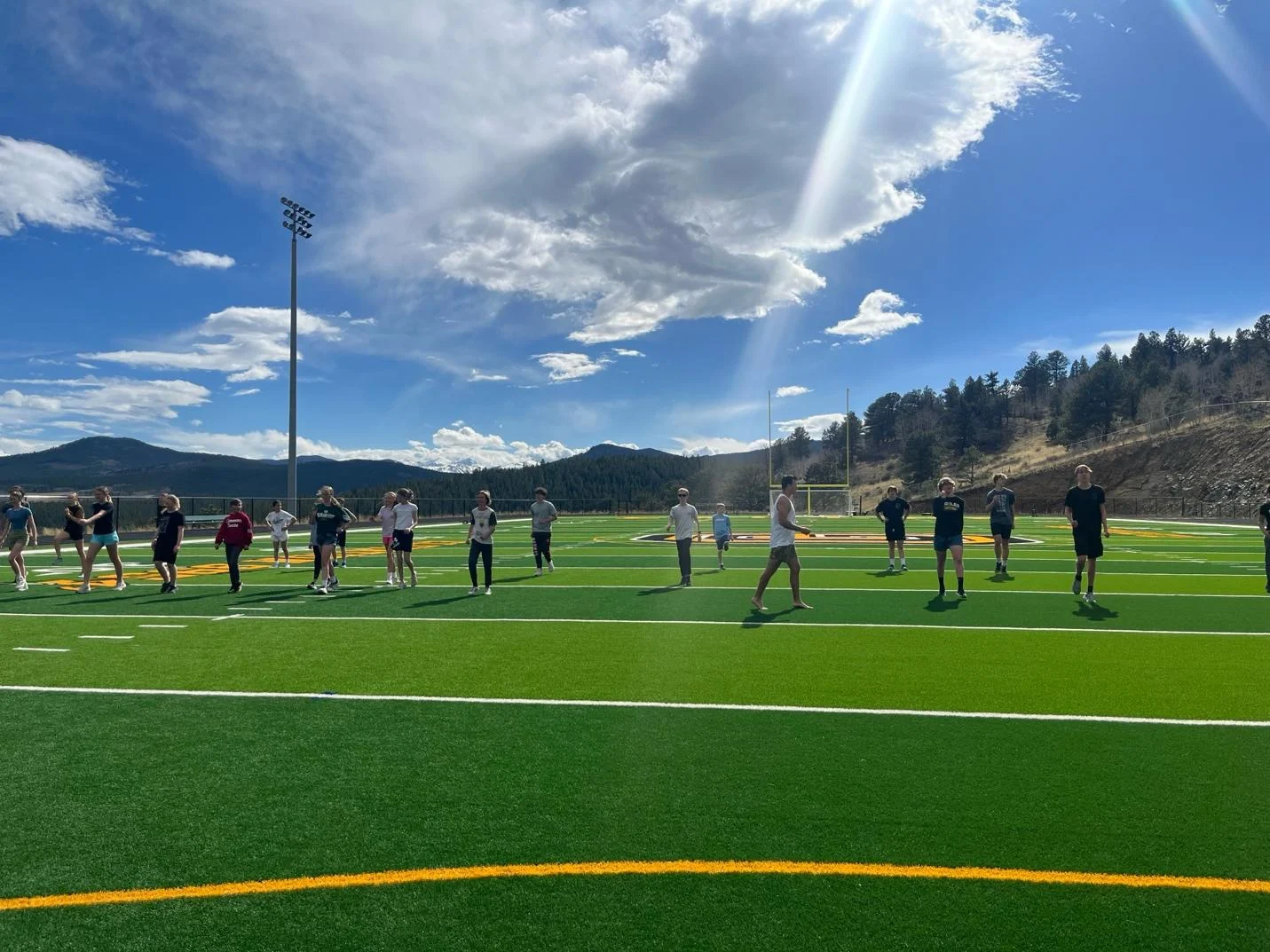
Image: Leading a TECH session in Colorado
The Pedagogical Challenge: Teaching What Matters
Understanding that proper technique creates safer, faster, and more confident athletes is one thing. Teaching it effectively is another. My research on successful speed coaches revealed critical differences in how elite and lower-level coaches approach instruction.
The type and manner of verbal communication that coaches use can make a real difference in athlete development and performance. This matters because feedback and instructions act as learning constraints. The words coaches choose and how they deliver them shape how athletes learn.
The distinction is subtle but profound. Traditional prescriptive coaching, where coaches repeatedly tell athletes exactly how to move, can actually impede athlete development. It limits opportunities for self-regulation. Instead, the best coaches understand when, how, and why to provide specific verbal information. They know that timing and framing matter.
The best coaches understand that their role extends beyond prescribing movement patterns. It’s to create learning environments where athletes discover efficient movement solutions within the constraints of proper biomechanics. This approach develops not just faster athletes but more resilient, self-regulating performers who can adapt their technique across different contexts and conditions.
This approach develops not just faster athletes but more resilient, self-regulating performers who can adapt their technique across different contexts and conditions, says @DillonMartinez Share on X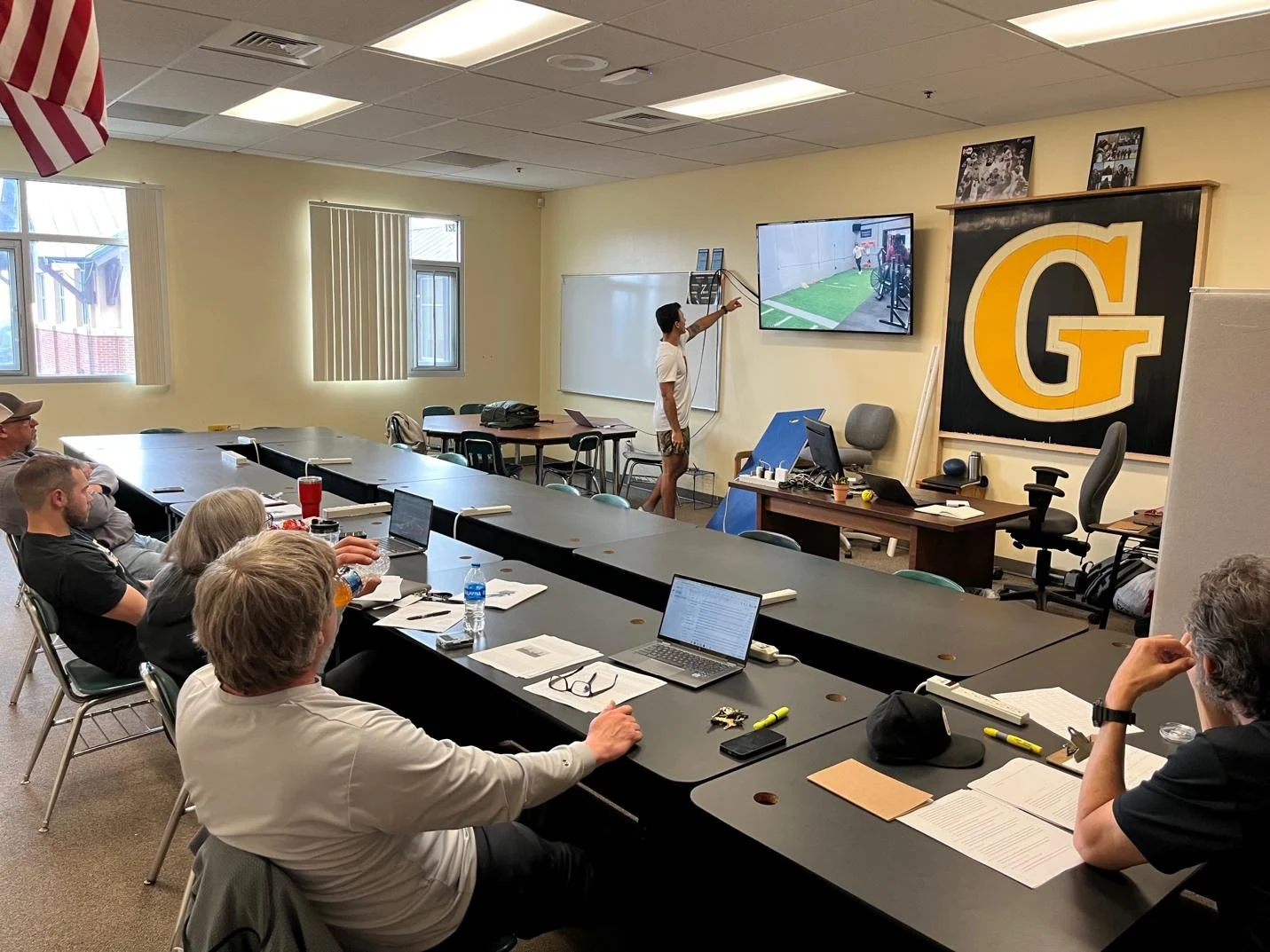
Image: Teaching a group of coaches the technique teaching progression
From Personal Pain to Professional Purpose
Looking back at my injury, I realize what was missing. It wasn’t more strength, more power, or even more speed work. What I was missing was the technical foundation that would allow my body to safely express the physical capabilities I had developed. The horsepower was there, but the drivetrain couldn’t handle it, the braking system couldn’t control it, and the driver hadn’t been taught how to properly manage the vehicle.
We need to rethink how we approach speed development, especially for young athletes and novice coaches. The temptation is always to focus on the impressive stuff: the weights lifted, the explosive exercises, the times on the stopwatch. But without a foundation of proper mechanics taught through smart coaching approaches, we’re building athletes on unstable ground.
The research tells a consistent story across different aspects of speed development. Biomechanics matter for safety. Proper technique reduces injury risk by managing mechanical strain. Maximum velocity work requires technical precision. Elite coaches prioritize mechanics alongside intensity. How we teach is as important as what we teach. Technique builds confidence. Proper mechanics enhance psychological resilience alongside physical performance. Multiple analyses confirm these principles across thousands of athletes.
Proper mechanics enhance psychological resilience alongside physical performance, says @DillonMartinez Share on XWhat This Means for Coaches
If you’re a coach reading this, whether you’re just starting out or you’ve been in the game for decades, here’s what the research and my experience tell us. Teaching proper sprinting technique isn’t just one element of speed development. It’s the foundation upon which everything else is built.
When you teach an athlete to sprint with proper mechanics, you’re teaching them how to stay healthy under high-velocity stress. You’re teaching them how to maximize the physical capabilities they develop in the weight room. You’re teaching them confidence in their body’s ability to perform under pressure. You’re teaching them a skill they can refine and adapt throughout their athletic career.
The question isn’t whether proper technique matters. The evidence is overwhelming. The question is how do we teach it effectively?
In this article, I’ll share the first major takeaway from the literature: how proper biomechanics reduce injury risk by managing mechanical strain. In Part 2 of this series, we’ll explore the pedagogical principles that guide successful coaches’ teaching decisions.
But first, we need to understand exactly what proper sprinting technique means from a biomechanical perspective.
Key Takeaway: Proper Biomechanics Reduce Injury Risk by Managing Mechanical Strain
The Research Foundation
One of the most comprehensive examinations of sprint biomechanics and injury prevention comes from Bramah et al. (2024), who explored the mechanistic link between sprint running mechanics and hamstring strain injuries. Their work fundamentally challenges how we think about injury prevention in sprint-based sports.
The traditional approach to hamstring injury prevention has focused almost exclusively on building tissue capacity through eccentric strength training. You know the routine: Nordic curls, Romanian deadlifts, and various hamstring strengthening protocols. While these exercises have value, they only address one side of the equation. As Bramah et al. (2024) point out, injury prevention and rehabilitation strategies have frequently focused on enhancing the capacity of the hamstrings to tolerate strain, with little consideration of factors directly influencing mechanical strain itself.
Within a biomechanical model of injury causation, muscle injury is considered the result of applied mechanical strain exceeding the tissue capacity to withstand strain (Bramah et al., 2024). Think of it like a rope. You can make the rope stronger by adding more fibers, which increases its capacity. But if you keep applying more and more force to that rope in inefficient or misaligned ways, eventually even the strongest rope will break. Sprint biomechanics represent the forces being applied to the rope. Proper technique manages how those forces are directed and distributed.
The majority of hamstring strain injuries occur during sprint acceleration and high-to-maximal velocity running (Bramah et al., 2024). These are precisely the phases where technical breakdown is most common. Athletes pushing for maximum speed, especially when fatigued, often see their mechanics deteriorate. The forward lean becomes excessive. The ground contact patterns change. The hip and knee angles shift. Each of these mechanical alterations changes how force is applied to the hamstring complex.
What This Means for Coaching Practice
The practical application is straightforward but profound. When you teach proper sprint mechanics, you’re teaching them how to manage the mechanical strain applied to their tissues during high-intensity running.
Bramah et al. (2024) identified several key biomechanical parameters that influence hamstring strain injury risk:
Hip mechanics and anterior pelvic tilt. The position of the pelvis during sprinting affects hamstring length and the strain placed on the muscle-tendon unit. Athletes who maintain proper pelvic positioning can reduce excessive lengthening of the hamstrings during the swing phase.
Trunk control and posture. Forward trunk lean beyond optimal angles can increase hamstring demand during late swing and early stance. Teaching athletes to maintain appropriate trunk angles across different sprint phases protects the posterior chain.
Ground contact patterns. How the foot contacts the ground and how forces are applied through the leg directly influences hamstring loading. Proper mechanics emphasize striking the ground with appropriate force vectors and managing the transition from braking to propulsive forces efficiently.
Maximum hip flexion angles. The range of motion at the hip during the swing phase determines hamstring stretch. While some hip flexion is necessary for stride length and speed, excessive angles increase injury risk, particularly when the athlete lacks the strength to control that range.
The beauty of this research is that it gives coaches specific, observable parameters to work with. You don’t need expensive force plates or motion capture systems. You need trained eyes that understand what optimal sprint mechanics look like and how deviations from those patterns might increase injury risk.
You need trained eyes that understand what optimal sprint mechanics look like and how deviations from those patterns might increase injury risk, says @DillonMartinez Share on XThe Connection to My Story
This research directly explains what happened to me in college. I was getting stronger, which increased my capacity to produce force. But nobody was teaching me how to manage that force through proper mechanics. My pelvic positioning during sprinting wasn’t optimal. My ground contact patterns had likely changed as I added muscle mass and power. The forces my body could generate had increased, but my technical foundation hadn’t kept pace.
The injury wasn’t a failure of strength. It was a failure of biomechanics. The strain applied to my hamstrings exceeded their capacity to withstand it, not because they were weak, but because the mechanical demands were being applied inefficiently.
Implementing This in Training
Start by understanding that sprint mechanics coaching is injury prevention coaching. Every technical cue you give, every drill you select, every correction you make is an opportunity to reduce mechanical strain on vulnerable tissues.
First, conduct an assessment to establish baseline mechanics. Before you load athletes with heavy strength training or high-volume sprint work, document what their natural sprint mechanics look like. Use video from multiple angles. Look specifically at the parameters Bramah et al. (2024) identified: pelvic position, trunk angles, ground contact patterns, and hip flexion ranges.
Second, prioritize technical development alongside physical development. As athletes get stronger and more powerful, their ability to produce force increases. This is when mechanics become most critical. The stronger the athlete, the greater the potential forces acting on tissues, and the more important proper biomechanics become for managing those forces safely.
Third, understand that fatigue changes everything. Bramah et al. (2024) noted that mechanical strain increases as athletes fatigue. This means your athletes are most vulnerable to injury at the end of hard training sessions or late in competitions. Technical coaching needs to extend to fatigued states. Athletes need to maintain proper mechanics not just when they’re fresh, but when they’re tired and their bodies want to compensate.
Fourth, individualize your approach. Not every athlete will have the same mechanical vulnerabilities. Some might struggle with anterior pelvic tilt. Others might have excessive trunk lean. Still others might show problematic ground contact patterns. Your technical coaching needs to address the specific mechanical issues each athlete presents.
The Bottom Line
Proper sprint biomechanics are a fundamental injury prevention strategy. By teaching athletes how to manage mechanical strain through appropriate technique, you’re giving them a tool that complements their strength training and protects them during the most vulnerable phases of sprinting.
The research is clear: building stronger athletes alone doesn’t prevent injuries. You need to build smarter athletes who understand how to move efficiently under high loads and velocities. That requires deliberate, systematic technical coaching grounded in an understanding of how biomechanics influence mechanical strain.
Understanding the biomechanics of safe speed development is crucial, but it’s only half the equation. The other half is knowing how to teach these principles effectively. That’s where pedagogy comes in.
In Part 2 of this series, we’ll explore the teaching principles that emerged from my research with 106 successful speed coaches. You’ll discover the two fundamental decision-making frameworks that guide elite coaches as they develop faster, safer, more resilient athletes. We’ll examine why technique must always come first, how systematic progression creates long-term success, and what separates coaches who build athletes that last from those who chase short-term gains.
Until then, start by pulling out your phone and recording your athletes. Look at those four parameters Bramah identified. Ask yourself: Are my athletes technically prepared for the forces they’re about to experience? That simple question might be the most important decision you make this week.
References
Bramah, C., Mendiguchia, J., Dos’Santos, T., & Morin, J. B. (2024). Exploring the role of sprint biomechanics in hamstring strain injuries: A current opinion on existing concepts and evidence. Sports Medicine, 54(4), 783-793. https://doi.org/10.1007/s40279-023-01925-x
Martinez, D. (2025). Speed-coaching as a pedagogical practice: Decision-making and priorities among successful speed coaches [Doctoral dissertation, Winona State University]. https://openriver.winona.edu/educationedddissertations/27/

