
The Fast Lane Episode 6
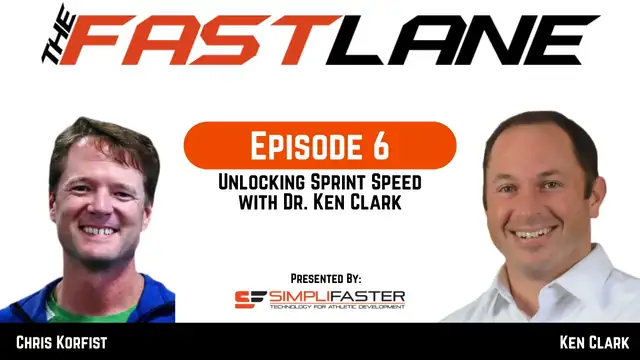


Summary
In this episode of The Fast Lane Podcast, Chris Korfist interviews sprint biomechanics expert Dr. Ken Clark about the key qualities that drive sprint speed, including angular velocity, force application, and stiffness. They also discuss why fundamentals like sprinting and plyometrics remain essential for developing faster athletes.
Episode 6: Unlocking Sprint Speed with Dr. Ken Clark
As always make sure you stream this on Spotify, Apple Podcasts and right in the video above!
Episode Summary
In this episode of The Fast Lane, Chris Korfist sits down with sprint biomechanics expert Dr. Ken Clark to break down the science of sprint speed and what truly drives improvements in athletic performance.
Dr. Clark explains the three key qualities that underpin sprint performance, why basic sprinting and plyometrics remain essential tools, and how concepts like angular velocity, stiffness, and hip torque influence running speed.
The conversation also challenges common misconceptions in speed training and highlights research that has shaped modern sprint mechanics and performance development.
If you work with athletes who need to move faster—whether in basketball, football, track & field, or other field sports—this episode provides clear takeaways on how to prioritize training for speed.
Key Topics Discussed
The Three Qualities That Drive Sprint Speed
Dr. Clark outlines three foundational qualities that contribute to faster sprinting:
• Angular velocity – how quickly the limbs cycle during sprinting
• Force application – how effectively athletes push into the ground
• Stiffness – the ability to rapidly store and release energy during ground contact
Together, these elements determine how efficiently an athlete can produce and apply force at high speeds.
Training Exercises That Actually Improve Speed
While many coaches search for advanced drills, Dr. Clark emphasizes that the fundamentals still drive most improvements.
Effective tools include:
• Sprinting itself
• Plyometrics
• Exercises that develop rapid force production and limb reversal
These methods build the neuromuscular qualities required for faster sprinting mechanics.
The Importance of Hip Torque and Limb Reversal Strength
One of the most overlooked factors in sprinting is hip torque, which plays a major role in rapid thigh switching.
Dr. Clark explains that sprinting speed relies heavily on the ability to reverse the limbs quickly during the stride cycle, a quality sometimes referred to as reversal strength.
Developing this capacity can significantly improve sprint mechanics and top-end speed.
Common Misconceptions in Speed Training
Many speed programs overemphasize technical cues or complex drills.
Dr. Clark explains that:
• Most athletes improve fastest through consistent exposure to sprinting
• Over-coaching sprint mechanics can sometimes interfere with natural movement patterns
• Training should prioritize force production and elastic qualities, not just technique.
Episode Chapters
00:00 — Introduction to Speed Development
02:16 — Key Qualities for Improving Running Speed
04:57 — Overrated Exercises in Speed Training
10:47 — The Importance of Hip Torque
16:20 — Lessons from Sprinting Experts
21:27 — Essential Research Papers for Athletes
Connect with Dr. Ken Clark
Twitter/Instagram @KenClarkSpeed

