
Roll, Reset, Repeat: Using Foam Rollers to Help Improve Speed and Strength
In this Article

Summary
Foam rolling is more than a warm-up filler or cool-down afterthought. Learn how to strategically embed intra-workout foam rolling into speed and strength sessions to maintain movement quality, sustain force output, and build a culture of proactive recovery.
Looking back at my athletic career, my best performances as a Division I track & field athlete occurred when I was healthy, which didn’t always align with being the strongest, having perfect technique, or simply being “in shape.” I was always chasing improvements in metrics or abilities linked to better performance, but I often overlooked the consequences of hard work that required equal attention. Like many athletes, I underutilized prehab and recovery tools. I use the term “healthy” because my body was signaling prolonged muscle soreness, reduced range of motion, and inconsistent power output. At the time, I attributed these symptoms to overtraining, despite stretching, eating right, sleeping, hydrating, and resting.
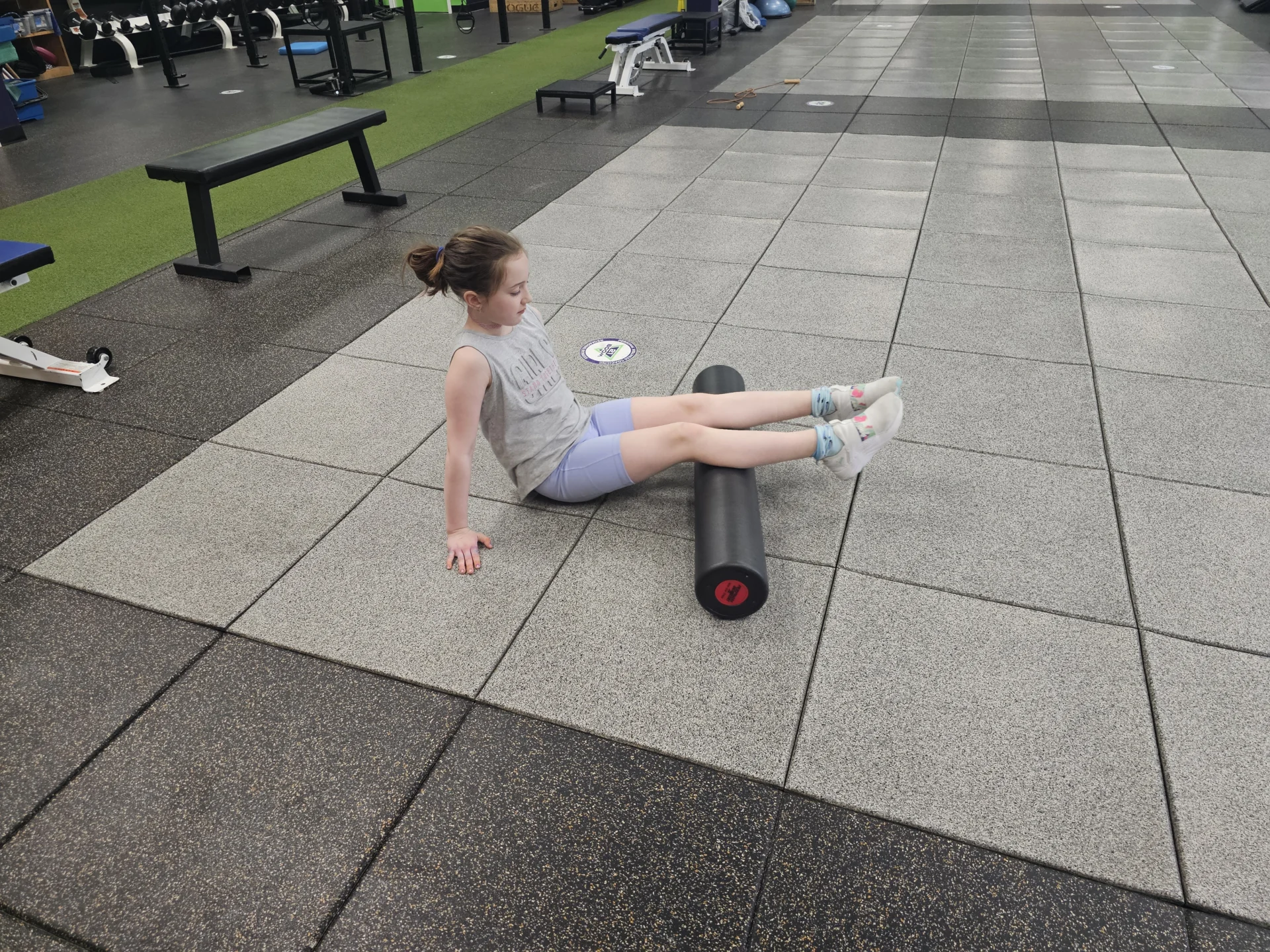
It wasn’t until our strength & conditioning coach paired foam rolling with our compound lifts that I noticed how my body really responded to intra-workout SMR. Using foam rolling during rest intervals seemed to smooth out transient restrictions, and enhance my proprioception during lifts, plyometrics, and speed work. The benefits were so clear that I incorporated foam rolling into more of my warm-up, cool-down, and practice routines. School life became less painful, warm-ups became less of a triage event, and performance improved. While I can’t claim intra-workout foam rolling was the sole reason, it forced me to inventory soreness and tightness while also allowing me to work at a high level without restrictions.
After college, I began coaching at the collegiate level and incorporated intra-workout foam rolling because its benefits are practical, repeatable, and easy to integrate. In my experience consulting with athletes and teams, many programs fail to use foam rolling strategically. It often appears as a filler during warm-up, an afterthought during cool-down, or some extra-credit standalone recovery activity. Sadly, coaches deploy them in programs without context or progression. Most of you likely have a foam roller at home or in your facility, yet like many simple tools, it is underappreciated.
Below, I’ll outline foam rolling fundamentals and tips for embedding it into your workouts to help elicit improvements in mobility, sequencing, force production, and durability.
Intra-Workout Foam Rolling Primer
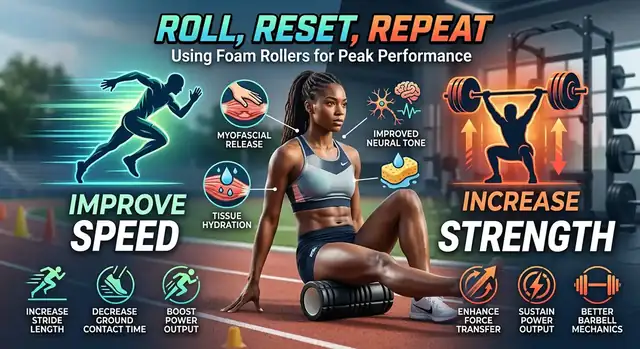
As most of you may know, foam rolling functions as a form of self-myofascial release (SMR), which simply applies pressure to soft tissues to improve neuromuscular tone, tissue hydration, and encourage a healthy range of motion. When I was in college, coaches believed that foam rolling helped break up adhesions, but eventually research showed that foam rolling really works on the mechanoreceptors, improving local blood flow and changing the tissue’s stiffness. Improvements in those qualities are why foam rolling is a staple in warm-up and cool-down protocols. This also has a direct effect on stride length, hip extension mechanics, ground contact time, and barbell force transfer. Strength and speed training demand the human body to execute high-quality movement patterns and repeatedly produce force.
The scientific rationale for employing foam rolling in workouts to improve performance is multifactorial. First, foam rolling modulates neural tone by stimulating mechanoreceptors, which influence muscle tone and tension. This often leads to immediate improvements in mobility without sacrificing power output. Essentially, foam rolling has the ability to hone the muscle’s state to be not too stimulated, but not too relaxed.
Second, research has shown that foam rolling augments local tissue hydration because our fascia has sponge-like properties. The compression from the roller pushes old fluid out and draws new fluid in. This action improves the sliding between muscle layers, which can improve an athlete’s movement.
Third, foam rolling also increases short-term range of motion without decreasing muscle activation. Admittedly, this is similar to my first point. I must stress that we are looking for a greater range of motion without the loss of power output, versus just an increase in power output.
So, the science backs the logic that foam rolling not only could prepare the body to move at a high level, but can also temporarily improve the performance of some athletes by removing their tissue restrictions and preparing their nervous system to produce power. Athletes with tight or compromised tissue may benefit from intra-workout foam rolling as a “tissue reset” by suppressing emerging stiffness and enabling them to sustain their mobility and output. Don’t get me wrong, I’m not suggesting that foam rolling itself leads to permanent performance enhancement. A logically consistent argument could be made that foam rolling indirectly contributes to long-term improvement if it allows the athlete to consistently train with better mechanics and a higher-quality stimulus in their workouts or practices.
When to Employ the Foam Rollers
The timing and duration of when you incorporate the foam roller within a session are crucial to achieving the desired benefits. I believe the most common use of foam rolling is during warm-ups or even before to help loosen up and prep key areas such as hip flexors, glutes, hamstrings, calves, thoracic spine, and lat/serratus fascia. The science supports a short duration of foam rolling paired with complementary dynamic movements. This combination can help ramp up the soft tissue stimulation and then bring in the dynamic mechanics to enjoy unrestricted movement. During high-intensity speed work, we use the rollers to put out “hot spots” that show up as the training intensity increases. Athletes can try quick 10-second rolls between reps on their calves or hip flexors to help feel fresh, but the bout is brief enough to not turn into a side quest. In the weight room, we use foam rolling between sets to help maintain movement quality and sustain performance in some of the compound lifts during the session. During cool-downs, athletes perform slower, longer-duration rolling paired with deep breathing, which can help with a parasympathetic shift and reduces DOMS.
Basic Guidelines and Periodization
Like any performance tool, foam rolling usage should shift with the training phase and the intent of the session. My off-season athletes tend to have slightly longer rolling sessions to help restore their tissue quality after a long competitive season, with some doing some standalone SMR sessions to get their body back to baseline. Athletes in pre-season mode are doing more targeted rolling, focusing on the key muscle groups that are experiencing a big shift in training volume from SAQ, lifting, and conditioning. In-season athletes are essentially in a maintenance cycle where they are using them frequently for short bouts to handle hotspots and prevent restrictions without adding too much to their plate. Performance athletes who are in their peaking phases are really using the foam roller to stay primed and help monitor any potential musculoskeletal concerns.
Regardless of phase, some of my guidelines remain consistent. Longer rolling periods (90 seconds or more per muscle) should not be part of the training session (warm-up, workout, cool-down) but should be part of a separate recovery session. Athletes should avoid excessive or overly aggressive rolling in the session because this may dull their readiness. I also stress that athletes should target specific areas of tension or muscles being worked rather than attempting a full-body routine. I like to use a coaching heuristic that athletes perceive intensity at 50%–70% of their pain threshold in order to activate their mechanoreceptors, but not going so far that they possibly create some inhibition. I also suggest athletes pair their rolling with a complementary movement, drill, exercise, etc. Last but not least, foam rolling duration and intensity should match the current phase of the training session. Slower and longer bouts fit cool-downs. Speed work or lifting should have very short bouts of rolling between sets or reps to keep the tissue and nerves engaged.
Following these guidelines has kept our foam rolling purposeful, appropriate, and helped prevent athletes from taking it too far.
Ideas for Foam Rolling During Speed Work
Integrating foam rolling into your speed workouts shouldn’t add a great deal of friction.
During the warm-up, I like to use 20–30 seconds of rolling on the hip flexors, calves, and T-spine to help clean up some rigidity and make sure we are hitting the necessary ranges. I have the athletes immediately pair each rolled out area or muscle group with a complementary dynamic drill, such as leg swings, pogo hops, or marches in order to help lock in the mobility and help them feel the changes in their mechanics. I like them to do at least each pairing two times, so the athletes should feel the changes in both the foam rolling and paired movement.
During the main session/set/block, I have athletes perform quick 10–12 second rolls on emerging hotspots that were identified in the warm-up or typically arise from increased intensity. Again, I have my athletes pair their rolling with a complementary movement, but it is only a handful of reps of some pogo hops, A-runs, or bounds just to stay facilitated and for the athlete to check if the rolling made any progress on their hotspot.
For the cool-down, we bring the foam rollers in during the stretching portion and will use slower, longer-duration rolling (~60 seconds) to help shift the body into recovery mode. We pair the rolling with a simple stretch to help with perfusion and encourage downregulation, which should enhance the stretching session.
Ideas for Foam Rolling in Strength Training
Integrating foam rolling into strength training is very similar to SAQ workouts. For warm-ups, I like to do 20–30 seconds of rolling on the primary movers like the quads, glutes, lats, and T-spine to get some blood flow to those areas and possibly identify some restrictions. I have the athletes pair those movers with an associated movement, like glute bridges, band pull-aparts, or maybe some ankle mobility.
Between sets of compound lifts, I like to have my athletes do some micro-rolls of 10–12 seconds on some of the potential restrictors in the lifts, like the hip flexors for squats, or lats for pressing, or the calves for Olympic lifts. If the athletes are working in groups on each platform or rack, I like following up with a quick patterning drill such as bodyweight squats, scap push-ups, or ankle hops to re-engage the neuromuscular system.
I like to end the lifting sessions with slower rolling on the major muscle groups (~60 seconds each) trained that day, paired with a light stretch and breathing drill to help flush some of that lactic acid and reduce stiffness from heavy lifting.
Testing It Out
Coaches can track the effects of foam rolling using a variety of measuring methods during the training session. Tools like jump mats or force plates, goniometers, GPS tracking, timing gates, motion analysis software, and other instruments can help coaches monitor changes in an athlete’s force, range of motion, and tissue readiness.
For example, a coach could track the impact of foam rolling on sprint performance with a timing gate system at 20m. Then, the coach can compare an athlete’s times before and after incorporating foam rolling into their sessions and see if it is converting into performance improvements.
Making It a Culture
Besides programming foam rolling into your workout, I would say that athlete compliance and buy-in are probably the biggest obstacles. I think foam rolling often suffers from the perception as a supplementary modality because it can be tedious. By limiting the rolling to a few interventions per week and integrating it at specific transition points, the athletes didn’t see it as homework but something that is there for a reason, and it didn’t interrupt the flow of the training session. This eventually led to consistent use and the start of a culture around doing the small things to improve. No longer was warm-up and cool-down a punishment. Consistent language by the coaching staff, coupled with visible leadership by veteran athletes, allowed foam rolling to become part of the culture and help grow an identity. Not only do you start to see the proactive habits become a standard, but athletes also improve their self-awareness by monitoring their body’s state. Athletes not only learn to self-correct with foam rolling but also start communicating with you about their readiness.
Risks, Considerations, and Limitations
Although I’m very bullish on foam rolling, I must point out a few risks, considerations, and limitations that coaches should consider when implementing or expanding their use. First and foremost, coaches need to avoid overreliance. If an athlete is repeatedly rolling out the same area to “fix” tightness, it may mask underlying restrictions or pending injuries. A coach should remain vigilant about who is spending an excessive amount of time rolling out just to Band-Aid an issue for the next training session. Yes, we want the athlete using the roller to help with ailments, but it is not a replacement for sports medicine or something that can offset the necessity to adjust the athlete’s training.
Second, coaches need to make sure athletes are doing the prescribed protocol that is appropriate for the current phase of training or training session. A coach doesn’t want athletes doing several minutes of slow rolling between accelerations or sets of snatches. Excessive rolling during high-intensity work can temporarily reduce tissue stiffness that supports force transmission, so having intra-workout foam rolling does add another element for the coach to monitor.
Third, individual responses will vary widely. Some athletes might experience clear gains, while others might not experience anything. Non-response could stem from training age, genetics, injury history, or psychosomatic tolerance. I’ve worked with athletes who only benefited from activation rolling between sets, and others who simply couldn’t handle the sensation on day one.
Another consideration is logistics. Foam rolling requires space, enough rollers, and hygiene management. Coaches need to assess whether they can handle the extra work to incorporate them appropriately.
Finally, I would stress that foam rolling is not a miracle. It offers short-term benefits, not permanent changes. It enhances readiness and recovery, nothing more, nothing less.
Foam Rolling Action Plan
- Warm-Up Integration (2–4 minutes total)
- Apply 20–30 seconds of targeted rolling to key areas (hip flexors, calves, T-spine, quads, glutes).
- Immediately pair each with a dynamic drill (leg swings, marches, bridges, band pull-aparts).
- Use this to identify early hotspots and establish clean ranges of motion before speed or strength work.
- Intra-Workout “Tissue Resets”
- Use 10–12 second micro-rolls on emerging hotspots (hip flexors, calves, lats, and glutes) between reps or sets.
- Pair with 3–5 reps of a complementary patterning drill (A-skips, bodyweight squats, pogos).
- Purpose: maintain mechanics, preserve force output, and keep neural tone without disrupting the flow.
- Cool-Down (3–5 minutes)
- Use 50–60 second slow rolling on the primary movers trained that day.
- Pair with a light stretch & controlled breathing for recovery.
- Programming Guidelines
- Keep long rolling (>90 seconds per muscle) in separate recovery sessions, not in a training session.
- Match rolling intensity to session intent: short and stimulatory for performance; slow and longer for recovery.
- Prioritize targeted areas over full-body sequences; avoid overly aggressive rolling that dulls.
- Culture & Compliance
- Integrate rollers at clear transition points to avoid “extra homework.”
- Use consistent language and veteran demonstration to normalize usage and build athlete self-awareness.
References
Behm, D. G., & Wilke, J. (2019). Do self-myofascial release devices release myofascia? Rolling mechanisms: A narrative review. Sports Medicine, 49(8), 1173–1181.
Behm, D. G., Wilke, J., & Doan, J. (2020). The effects of foam rolling on performance and recovery: A systematic review of the literature. Sports Medicine, 50(5), 965–985.
Cheatham, S. W., Kolber, M. J., Cain, M., & Lee, M. (2015). The effects of self-myofascial release using a foam roll or roller massager on joint range of motion, muscle recovery, and performance: A systematic review. International Journal of Sports Physical Therapy, 10(6), 827–838.
Findley, T. W. (2009). Fascia research from a clinician/scientist’s perspective. International Journal of Therapeutic Massage & Bodywork, 2(4), 10–16.
Krause, F., Wilke, J., Niederer, D., Vogt, L., & Banzer, W. (2017). Acute effects of foam rolling on passive tissue stiffness and fascial sliding: Study protocol for a randomized controlled trial. BMC Musculoskeletal Disorders, 18, 299.
MacDonald, G. Z., Penney, M. D. H., Mullaley, M. E., Cuconato, A. L., Drake, C. D. J., Behm, D. G., & Button, D. C. (2013). An acute bout of self-myofascial release increases range of motion without a subsequent decrease in muscle activation or force. Journal of Strength and Conditioning Research, 27(3), 812–821.
Pearcey, G. E. P., Bradbury-Squires, D. J., Kawamoto, J. E., Drinkwater, E. J., Behm, D. G., & Button, D. C. (2015). Foam rolling for delayed-onset muscle soreness and recovery of dynamic performance measures. Journal of Athletic Training, 50(1), 5–13.
Schleip, R., & Müller, D. G. (2013). Training principles for fascial connective tissues: Scientific foundation and suggested practical applications. Journal of Bodywork and Movement Therapies, 17(1), 103–115.
Schroeder, J., Wilke, J., & Hollander, K. (2021). Effects of foam rolling duration on tissue stiffness and perfusion: A randomized cross-over trial. Journal of Sports Science & Medicine, 20(4), 626–634.
Schroeder, A. N., & Best, T. M. (2015). Is self-myofascial release an effective preexercise and recovery strategy? A literature review. Current Sports Medicine Reports, 14(3), 200–208.
Skinner, B., Moss, R., & Hammond, L. (2020). A systematic review and meta-analysis of the effects of foam rolling on range of motion, recovery and markers of athletic performance. Journal of Bodywork and Movement Therapies, 24(3), 105–122.
Wiewelhove, T., Döweling, A., Schneider, C., Hottenrott, L., Meyer, T., Kellmann, M., Pfeiffer, M., & Ferrauti, A. (2019). A meta-analysis of the effects of foam rolling on performance and recovery. Frontiers in Physiology, 10, 376.
Wilke, J., Müller, A. L., Giesche, F., Power, G., Ahmedi, H., & Behm, D. G. (2020). Acute effects of foam rolling on range of motion in healthy adults: A systematic review with multilevel meta-analysis. Sports Medicine, 50(2), 387–402.

