
Fail Harder: Why Using Your Weaknesses Makes You a Better Coach
Summary
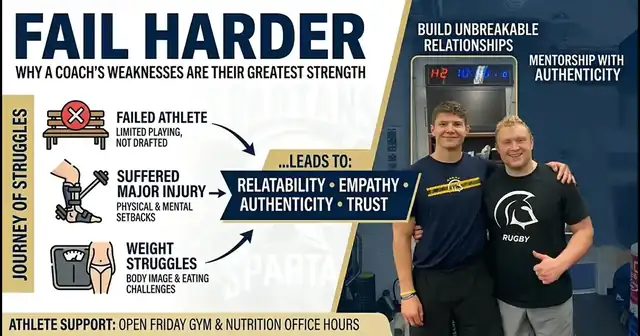
Your failures as an athlete, your injuries, and your personal struggles are not weaknesses to hide. They are your most powerful coaching tools.
2 years ago, I suffered a sports hernia while lifting.
Before that, I was a university athlete who only got to play 2 out of 24 games.
Before that, I was a high school athlete who never got drafted to the WHL or the NHL.
Before that, I was a chunky kid who struggled with his weight.
And these experiences are what have allowed me to succeed as a coach.
You see, we deal with people/athletes that live real lives. They struggle. They get injured. They get cut. They have their dreams crushed.
So have I.
That journey not only makes me more relatable as a human being but gives me a rare insight into what they are feeling and allows me the opportunity to help them walk those roads.
Breaking the “Hard Coach” Facade
As a coach, especially in strength and conditioning, people often see you as tough, disciplined, “hard”, or whatever buzzword they throw around these days. And we often are. But what most people don’t understand is the journey most of us have gone on to become those things.
Listen to any sports performance podcast and 90% of the interviews will start with “I wasn’t a very good athlete, but I worked hard.” Most of us have failed as athletes (hence why we are coaches now).
Keep listening to that same podcast and you will hear those same coaches say something along the lines of “I had a major injury that forced me to spend more time on my body in the weight room, and I fell in love with it.” Most of us have suffered a major injury setback.
Then there is an unspoken one: body composition. We are in the fitness industry. The same fitness industry where shirtless influencers on YouTube and TikTok tell people what to do while flexing their massive biceps and showing off their 8-pack abs. A lot of us do not look like that. So whether we admit it or not, there is some pressure to “look the part,” and I for sure have struggled with that as I try to validate who I am in the real world while competing with these influencers.
But these struggles are what make us relatable to our athletes who:
- Get injured
- Struggle with eating and body image
- Don’t get selected to play/get cut from teams
- Have bad days
So I think as S&C coaches, rather than hide these aspects of our lives and pretend we always do (and always did) have it together, we should be vulnerable and share our past struggles to make ourselves more relatable to our athletes.
Let me explain some simple ways I have done this so you can hopefully learn and see that it is not as scary as it sounds.
Building Trust with the Non-Traveling Athlete
On Fridays, I hold some “Open” training sessions where athletes who are not playing can come and get an extra lift in. Now they might not be playing because of injury, because their team has a bye week, or because the coaching staff didn’t select them to travel that weekend.
I’m going to focus on the latter group for this example because this is one of my favorite parts of my job. Early in the year when these sessions start, I like to talk to those athletes, often individually, and tell them a bit about my sports journey so they know I understand what they are going through and that I am open to talking about it if they want. Then I always finish with this line:
“Thank you for being here. It is great to see you. But I never want to see you here on a Friday again. Let me know what I can do to make that happen. You feel me?”
I honestly get goosebumps every time I give this line because I know the power it holds for them, the expectations it places on me, and the trust it creates between us. Epic.
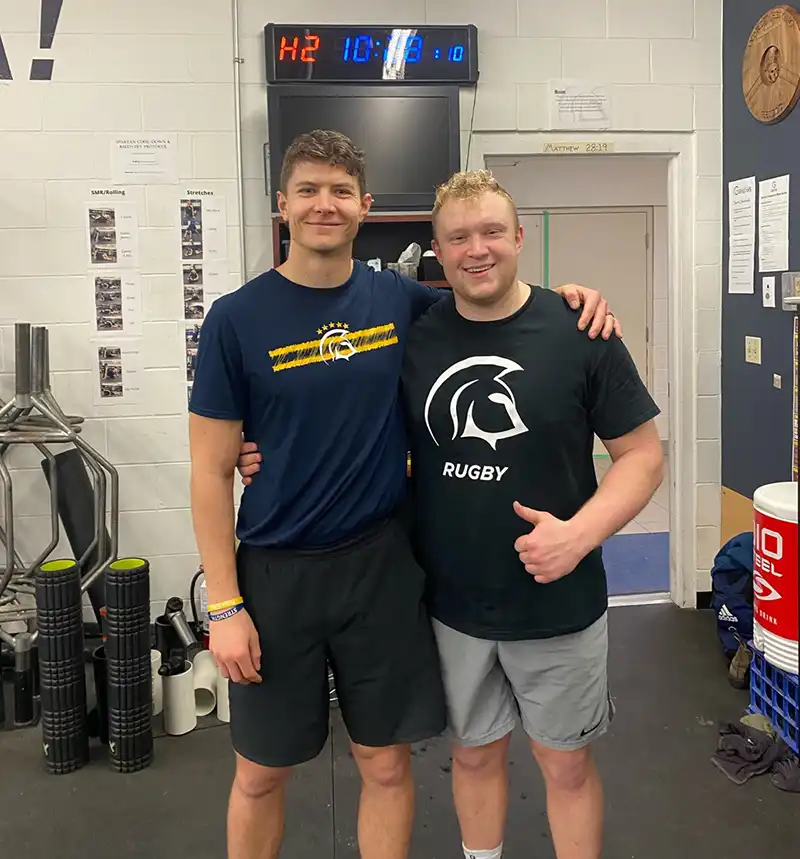
Image 1: Being honest with athletes can build the best relationships
But aside from these mini moments where I can share my journey, there are lots of other times where we can exercise our authenticity with our athletes and show that we are just like them.
Reframing Rehab: The Mental Side of Injury Recovery
As I mentioned, a few years ago I suffered a sports hernia while doing Bulgarian split squats (see, they are the devil!). Before then I had never had a major injury. Thankfully it did not require surgery and I didn’t miss a moment of work (because I’m “hard,” remember?), but it taught me a lot about rehab, dialing back, and that sometimes lifting hard isn’t actually going to cure you. Aside from my own personal learning about rehab, going through this injury and rehab process allowed me to be more empathetic to our athletes who are struggling with their own physical setbacks. Going through that process allowed me to have more real conversations about what it is like to mentally not do what you love and to feel less than yourself every day. I think those are conversations we can all have as caring human beings, but until you have actually gone through something that takes months to come back from, the depth of that struggle is hard to understand. I know it was for me before that happened to me.
For example, I used to think that getting injured was a nuisance and that doing your rehab work was just another part of training. But after going through it myself, I am much harder on athletes doing their rehab from a physical standpoint, but softer on the mental side. I remember one time working with one of our soccer players who was coming back from an ACL injury (much worse than what I went through), and they weren’t having a great day mentally. The injury had kept them from what they loved for a few months now, and it was wearing on them. I went up to them, sat beside them, and just started to ask how school was, trying to take their mind off their physical limitation. After chatting for a bit I told them how I can understand what they are going through, as having what you love taken away is hard, but I told them that I really appreciated them still showing up each session and putting in work to get better, as these small wins will add up when they returned to the pitch. The athlete thanked me and went along her day. A few months later she eventually did return to playing for us, and I know that I am not the hero of the story, but it felt good being able to sit in that moment with her and encourage her in her journey. Not by telling her to take a day off, but by reminding her of how her struggles will pay off, and they did. That is something I probably would not have done had I not gone through the struggle myself.
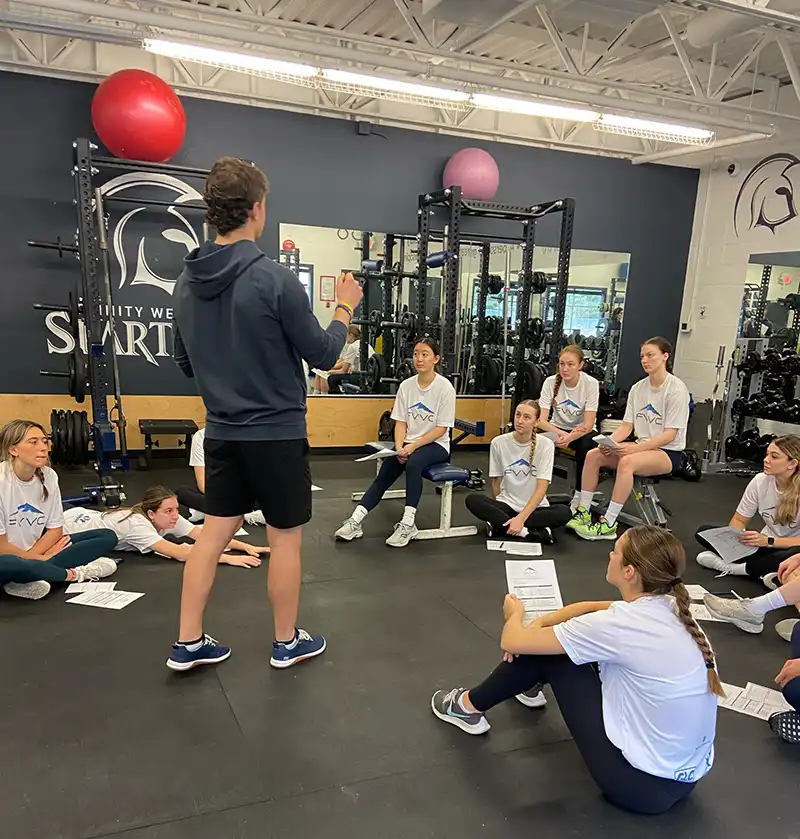
Image 2: Educating your athletes on the right things becomes much easier if you have gone through struggles yourself
The Pressure to “Look the Part” in Strength & Conditioning
As strength and conditioning professionals in the fitness industry, athletes and staff often rely on us to provide education on living a healthy lifestyle, which includes nutrition. Now this is going to happen to you whether you are qualified or not, which is why I recommend getting some form of nutrition coaching certification to help you with this one. Anyway, the problem is most people often go to those who seem to have it all together for their info. They see the shirtless person with abs and think “I want that so I will listen to them,” which is a huge mistake. Unfortunately you can’t just see knowledge or experience like you can muscles, so most coaches struggle to communicate well to their athletes or have them buy in fully if they aren’t someone their athletes aspire to LOOK like (and yes, once you build trust and show you know your stuff this can change, but off the start it is tough). As I reflect on this myself, I realize this is part of why I chase and have so many certifications. Certifications are literally a way of showing my qualifications as a coach in hopes that they will enhance buy-in with those I interact with. Hmm… (Thanks for sticking with me with that side thought!)
For example, in my life I have always struggled with my weight and eating. I was a chunky kid, bullied for my weight, but then hit puberty and fell in love with training and finally got the abs I always wanted. But life gets busy and stressful, and the ebbs and flows pull you away from focusing only on yourself and your own appearance. There was a time when all I cared about was my own muscular physique. But now I have a wife and 2 kids and 300+ athletes that I would rather see succeed than myself. (Was I ever the most muscular guy you have ever seen? Let’s just say if you saw me working out in a public gym, I would not be the first guy you would walk up to and ask for advice on lifting…)
So life moves on and some things get harder and some things slip. Do I still have abs? Yes. But the time of year will dictate how well you can see them. Why? Because like many people (including my athletes) I struggle with my eating sometimes. It’s hard. But instead of being ashamed of it (which I still am at times), I try to use it to my advantage so that when an athlete tells me about their struggles, I can relate. Instead of telling them “Well the research says you should…” I can be a human being and say “Yeah, that sucks. I hear you on that one. Here is what has worked for me…” Way more impactful, trust me.
Creating a Safe Space for Real Conversations
I hold an office hour once a week (all the free time I have) where athletes can sign up and chat about anything they want or need to. More often than not I frame it as a “Nutrition Office Hour” because most questions outside of lifting stuff come from that area. One of my most common things I try to tell those who come and chat with me is that I am there to support them fully through their journey. I know for myself, when I am struggling with my own eating, it feels like I am the only one in the world who struggles and no one is there to help me (which I know is not true, but in the moment can be a hard thing to remember). So by learning this about myself, I make sure to assure those who come to me that I will support them, provide any extra help or resources they need, and walk with them as we journey toward their best self. I then do my best to follow up with them, hopefully with an in-person chat but at the very least with a simple email reminding them of our chat and the goals we set out.
I guess the best way to sum up what I am trying to say is that sometimes people don’t actually want to hear the “right” answer. They just want someone to be there for them, listen to them, and know that they are not alone. Thinking you are the only one going through something is scary, and we as coaches have an incredible opportunity to open up and show our athletes that we too have been where they have been (as most of us have). We have walked in their shoes and made it out the other side. Things will be okay.
And even if we have not gone through the exact same things they have, if we have similar experiences we can do our best to relate. I have never been a university all-star with all the big-time pressure on me to perform, but when TWU hired me I was the youngest Head S&C coach at a Canadian university at the time, and so I know what it is like to have high expectations and the desire to live up to them. So while not exactly the same, close enough. To steal a line from the movie The Interview, “Same-same, but different.”
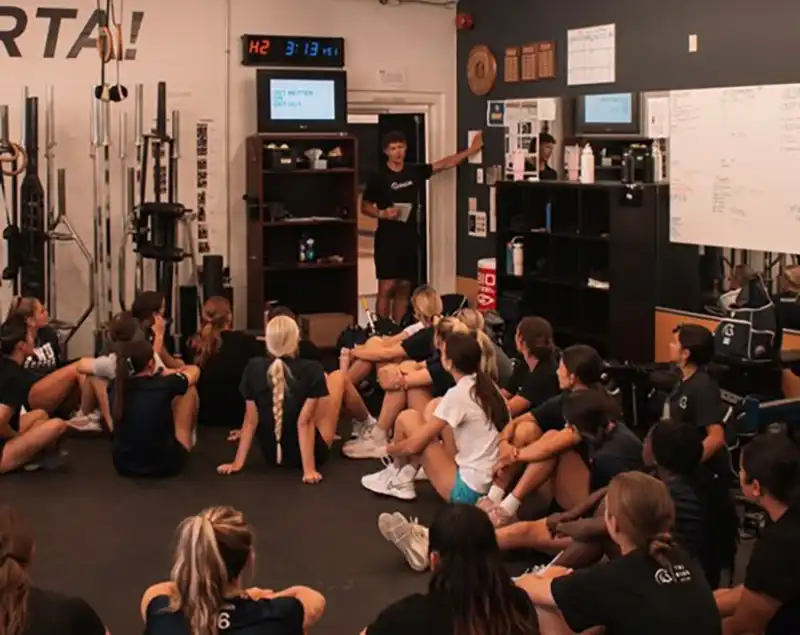
Image 3: No, you might not have gone through exactly what your athletes have, but being able to relate your experience to theirs can be a powerful aid in your coaching toolbox.
I love telling my athletes that I was a student-athlete like them once. I know what it is like to struggle with midterms and tough practices on the same day. I know what it is like when coaches don’t select you to play week after week (unfortunately I know that one all too well). I know what it is like to be hurt and unable to do what you love for months. I know what it is like to struggle with comparison about your looks. I know what it is like to lose. But if I don’t share my experience to help those going through the same thing, then I am wasting a major opportunity to impact those around me and selfishly better myself as a coach.
So as I wrap up, I want to encourage you to do a deep dive into your own life and your past. Not as a way to dig up some deep hurts, but as a way to arm yourself with more empathy and authenticity for those you are coaching. For example, you could start by asking:
- What areas have you struggled in where you recognize the same things with your athletes?
- What past setbacks got you to where you are that you can share with those you coach to help inspire them to keep going when things get tough?
- When are the best times to share these? Honestly, this is a big one because you don’t want to just unburden all your issues at once or air out “dirty laundry” with your teams. Finding the right moment to share a nugget with the right athlete at the right time (like I do during those Friday Open Gym times) makes a world of difference.
We can all do it. We just need to be willing to be humble, authentic, and show our athletes and clients that they are not alone. Because for those of us who have struggled, being alone is the worst place to be, so why would we leave our athletes stuck there if we have been given this incredible gift called “experience” to help them for the better? As one of my counselors once told me, “Instead of trying to be a role model for your appearance or your intelligence, you have the opportunity to be a role model because of your experience. And that is way more powerful than you know.”
Good luck, coaches.
Peace. Gains.
Bibliography:
Backman, E., Hejl, C., Kristoffer Henriksen, & Zettler, I. (2024). Compassion matters in elite sports environments: Insights from high-performance coaches. Psychology of Sport and Exercise, 71, 102602.
Cox, A., et al. (2014). Empathy in sports, exercise, and the performing arts. Psychology of Sport and Exercise, 15(5), 534–542.
Ross Lorimer. (2013). The development of empathic accuracy in sports coaches. Journal of Sport Psychology in Action, 4(1), 26–33.
Madonna, G., & Agosti, V. (2019). Empathy and sport performance. Giornale Italiano di Educazione alla Salute, Sport e Didattica Inclusiva, 3(3).

