
Analyzing the Physiological Demands of Box Lacrosse – The Feasibility of Using Ice Hockey Research as a Substitute for Box Lacrosse



Summary
Box lacrosse is a high-intensity collision sport, yet research describing its specific physiological demands remains scarce. In this analysis, Carmen Bott evaluates the feasibility of using ice hockey research as a surrogate framework, citing shared structural constraints like short shifts and repeated high-intensity bouts. The findings highlight the critical roles of anaerobic power and muscle…
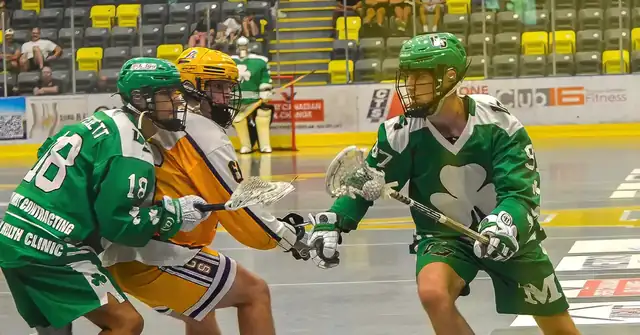
Image credit: Photographer Carter McGregor
This paper is the result of a BPK496 directed studies project with student Logan Geisler, a Kinesiology major at Simon Fraser University in Burnaby, Canada.
Abstract
Background: Box lacrosse is a fast-paced, indoor, collision-based sport with rapidly growing participation in Canada and increasing international expansion. Despite its prominence, published research describing the physiological demands of box lacrosse remains scarce, limiting evidence-based training, testing, and athlete development guidance.
Purpose: This paper evaluates the feasibility of using ice hockey research as a surrogate framework for analyzing the physiological demands of box lacrosse.
Methods: The authors conducted a narrative, comparative synthesis using available literature on box lacrosse and a substantially larger body of evidence from ice hockey, a sport sharing similar game structure (short shifts, frequent substitutions), playing surface constraints (rink-sized arena), and repeated high-intensity contact demands. The researchers considered field lacrosse literature but treated it as non-transferable due to major structural and intensity differences.
Results: The evidence supports box lacrosse as a high-intensity, intermittent collision sport characterized by repeated 30–45 s work bouts and incomplete recovery between shifts. A combined anaerobic–aerobic profile is indicated, with high contributions from the ATP–PC system and anaerobic glycolysis during explosive efforts, and a meaningful aerobic contribution to repeated-bout performance and recovery. Ice hockey metabolism data demonstrate high average cardiovascular strain (≈84% HRmax), substantial early-game lactate accumulation, and progressive declines in sprint output and acceleration/deceleration frequency across periods. Importantly, fatigue appears more strongly associated with muscle glycogen depletion falling below critical thresholds (≈250–300 mmol·kg⁻¹ dry weight) and related ion-regulatory mechanisms than with ATP depletion or severe acidosis.
Practical Implications: Box lacrosse athletes likely require high anaerobic power, collision-tolerant strength, repeat-sprint capacity, and aerobic recovery qualities; shift management and carbohydrate availability may be key levers to preserve late-game performance.
Conclusions: Ice hockey provides a defensible—though biomechanically imperfect—reference model for interpreting the physiological demands of box lacrosse. Direct, sport-specific research is urgently needed to quantify external load, positional demands, and fatigue mechanisms in box lacrosse across competitive levels and sexes.
Keywords: box lacrosse; ice hockey; intermittent high-intensity sport; repeated sprint ability; glycogen depletion; aerobic recovery; anaerobic power; collision sport
Introduction
Fast, physical, and unapologetically intense—Box Lacrosse is the indoor game where hockey speed collides with basketball flow and old-school toughness. Played in tight quarters with nonstop transitions, it rewards creativity, grit, and split-second decision-making, making it one of the most demanding—and electrifying—team sports you’ve probably never truly seen up close.
Box lacrosse is the indoor version of the international sport of Lacrosse played primarily in a hockey rink with the ice removed, commonly referred to as “the box”. The sport features six players per team (five runners and one goaltender), a smaller playing surface, and a shot clock, all of which create a fast-paced, highly physical game that demands rapid decision-making, technical stick skills, and frequent body contact. Compared to field lacrosse, box lacrosse is played in tighter spaces, allows greater physicality, and places a premium on short, high-intensity shifts and off-ball movement.
Box lacrosse is the dominant form of lacrosse played in Canada. In 2024, about 76% of all lacrosse players in Canada played box lacrosse, with approximately 38,157 players registered with Lacrosse Canada. Participation in the sport has been growing steadily, increasing about 11.3% from 34,272 in 2023 to 38,157 in 2024. Box lacrosse has also begun to spread in popularity internationally. Canada has historically dominated international box lacrosse competition, including the World Lacrosse Box Championships, where the Canadian men’s team has remained undefeated since the tournament’s establishment in 2003, although other nations such as the United States have begun to close the performance gap.
Competitive box lacrosse has also become increasingly accessible for women’s and girls’ divisions over the past several decades. Recent developments, such as the introduction of the women’s world box lacrosse championships and the growing prevalence of girls-only and mixed-gender (“co-ed”) teams, have expanded participation opportunities for women worldwide, with several box lacrosse teams also playing in Europe.
There are many different divisions for box lacrosse in Canada depending on age and sex. Youth aged 7-16 are eligible for minor box lacrosse leagues. Minor generally includes municipal teams that compete against nearby cities, with mixed gender “co-ed” or girls-only divisions available. Athletes aged 17-21 then progress to the junior league, and after a series of tryouts or selection camps, coaches place them in an A, B, or C division. After age 21, the athlete could try out or be drafted to compete in the Senior League (A, B, or C division) as well as have the possibility to be drafted by a professional team in the National Lacrosse League (NLL).
| Age Range | League Level | Key Features | Divisions / Pathways |
|---|---|---|---|
| 7–16 | Minor Box Lacrosse | Municipal teams competing against nearby cities; strong focus on development | Co-ed and girls-only divisions |
| 17–21 | Junior Box Lacrosse | Athletes attend tryouts or selection camps and are placed by competitive level | Junior A, B, or C |
| 21+ | Senior Box Lacrosse | Advanced competitive play following tryouts or drafts | Senior A, B, or C |
| Elite / Professional | National Lacrosse League (NLL) | Highest level of professional indoor lacrosse | Drafted from Junior or Senior ranks |
One of the greatest difficulties in analyzing the physiological demands of box lacrosse is the lack of available published research. Using the search term “box lacrosse” in a research article database such as Web of Science yields only 12 results, of which only three reference the sport of box lacrosse. Comparing this to other major sports, the search term “ice hockey” yields 3,578 results, “basketball” yields 17,198, and “soccer” yields 38,442 results. While the search term “lacrosse” yields 1,135 results, these studies are based on field lacrosse, an entirely different version of the game. Despite modern box lacrosse originating from field lacrosse, the two sports differ significantly in technique and playstyle. Box lacrosse is significantly faster paced; it takes place in a smaller arena, increasing player contact and the number of high-intensity maneuvers while decreasing downtime between plays. These factors result in vastly different profiles between box and field lacrosse athletes.
In this article, the authors examine ice hockey as a point of reference for analyzing the physiological demands of box lacrosse. There are many similarities between the two sports, including the energy systems, strength and power requirements, and gameplay characteristics. While differences are present regarding the mechanics of acceleration, deceleration, and changing direction on-ice versus on-foot, the similarities between sports could lead sport scientists to a starting point in a similar physiological profile.
The objectives of this article are as follows:
-
To explore ice hockey as a substitute invasive team sport to gain a better understanding of the physiology of the demands of box lacrosse.
-
To review the physiological profiles of well-trained ice hockey athletes.
-
To provide future research directions to improve our understanding of the physiological demands of box lacrosse.
The Lacrosse Origin Story
Originating as an Indigenous peoples’ game, traditional lacrosse dates to the 1100s and was created by the Haudenosaunee as a form of cultural expression, community building, and spiritual healing. This activity was first documented by Europeans in the 1630s and gradually gained popularity in Canada and the United States, evolving into what is now known as Field Lacrosse. However, it was not until the 1920s in Montreal, Canada, that field lacrosse player and referee Paddy Brennan adapted the traditional game to address limitations in pace and continuity. Frustrated by frequent stoppages caused by the ball going out of bounds, Brennan introduced a smaller, faster-paced version of lacrosse played in an enclosed space with boards, allowing continuous play and significantly increasing the speed and physicality of the game. Named ‘box lacrosse,’ it was initially a success with Indigenous peoples living on reserves in Canada and the USA before continuing to grow in popularity into what it is today.
Box lacrosse can be classified as a high-intensity, team-based, intermittent, collision sport, similar to ice hockey or indoor soccer. The rules and game logistics vary slightly depending on the level of play. The highest level, the National Lacrosse League (NLL), involves players who have been selected through an entry draft by one of the 14 professional teams. In this league, game playtime is one hour, broken down into 15-minute quarters. Between each quarter is a 2-minute break, except for halftime, which is 15 minutes. At the end of the fourth quarter, whichever team has scored the most goals wins. In the event of a tie, a series of 15-minute sudden death overtime periods begin, ending as soon as one of the teams scores a goal.
The playing surface, known as the box, is the size of a hockey rink (200x85ft). The floor is typically made of concrete or artificial turf, with boards surrounding the perimeter, and a crease around the goal (Figure 1.1). Physical collisions and player interactions, including body checking and cross-checking, are integral components of box lacrosse. However, the sport enforces clear regulations to limit dangerous contact, such as penalties for butt-ending, high-sticking, and illegal cross-checks delivered above the shoulders, below the waist, or from behind. Although fighting is permitted, it consistently results in major penalties assessed to both players involved, reinforcing the league’s emphasis on player safety. Despite these regulations, the high degree of physicality remains a defining and essential characteristic of the sport at competitive levels.
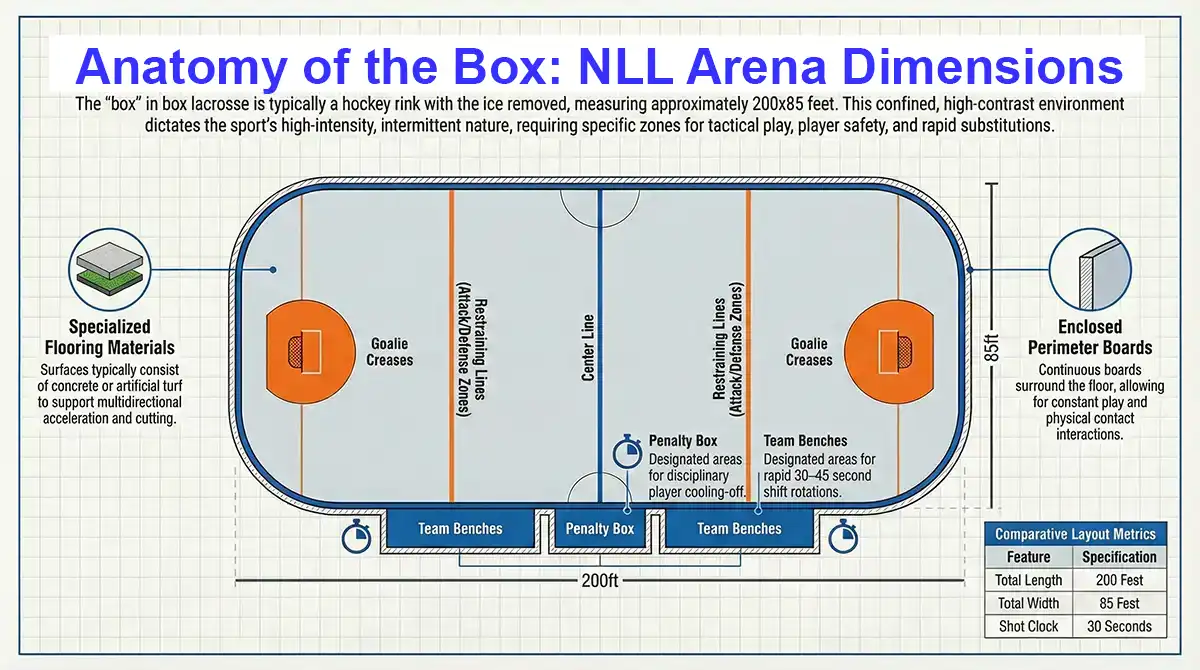
Figure 1.1: Dimensions of a National Lacrosse League box lacrosse play area, including center field, goalie creases, attack and defence zones, and team benches.
During a game of box lacrosse, players frequently rotate in and out of play in short, high-intensity shifts, often coinciding with changes in possession. At higher levels of competition (Junior, Senior and Professional), teams employ specialized personnel, sending defensive players onto the floor when the opposing team has possession and offensive players when their own team controls the ball. The presence of a 30-second shot clock and an 8-second time limit to advance the ball past the center line further accelerates the pace of play, resulting in a game that is consistently fast, explosive, and physically demanding.
In addition, U13 leagues and above involve collision and other forms of contact. This can range from poking and slapping the opponent’s stick to crosschecking and bodychecking. The NLL even allows fighting to occur between players. Outside the NLL, there is a great variety of box lacrosse divisions based on age, sex, and location. The senior box lacrosse league is for male adults aged 21 years or older, with the athletes being selected for either the Senior A, Senior B, and Senior C divisions. The top players are selected for the Senior A division, which has a competition season culminating in the Mann Cup, a competition between the Western Lacrosse Association and the Ontario Lacrosse Association. A majority of the National Lacrosse League players participate in the Senior A division during the offseason.
Junior box lacrosse is also divided into Junior A, B, and C divisions, and is for 17-21 year old males. Similarly to senior box lacrosse, the A division contains the top players who are drafted at the beginning of the season; however, the west and east coast are wholly separate from one another. In Junior and Senior lacrosse leagues, the total playtime of the game remains one hour but is divided into 20-minute thirds, with a 10-minute intermission between periods. If the score is tied at the end of the game, a single 10-minute overtime period will occur with the first to score winning. The rink is very similar to the National Lacrosse League, however there is slight flexibility in the dimensions, allowing 180-200ft by 80-90ft. In addition, the Canadian Lacrosse Association does not specify the material of the flooring, with common materials ranging from wood to concrete. Finally, rules of contact between players are the same as the National Lacrosse League, although fighting is not allowed to any degree.
Lastly, the minor box lacrosse league is separated by age group, with U7, U9, U11, U13, U15, and U17 divisions. In addition, minor box lacrosse is separated into a girls-only and a co-ed division. There are further modifications to the rules of box lacrosse at this level. U7 and U9 divisions play only three 15-minute periods. U7-U11 have restricted contact, with only equal contact pressure being allowed and no body checking permitted. Lastly, the positions in minor league box lacrosse tend to be less specialized, with all runners playing both offense and defense.
The Demands and Physiology of Box Lacrosse
Current literature analyzing the demands and physiology of box lacrosse is very limited. In fact, a scoping review by Ripley et al. highlighted a lack of literature in box lacrosse and identified only two related studies. Hauer et al. investigated the use of small-sided games to elicit a sport-specific aerobic training effect in box lacrosse using a GPS. Their findings did not provide information about the physical demands of box lacrosse. A second study, also by Hauer et al., investigated the use of heart rate (HR) and rate of perceived exhaustion (RPE) in monitoring load and recovery of box lacrosse athletes. However, this study centered on the reliability and validity of HR and RPE, rather than providing an analysis of the physical demands of the athletes. There is also a study identifying match demands of officials and umpires in the different forms of lacrosse. That study did not provide any information on the players and no conclusions about game demands can be drawn.
Field lacrosse, while sharing similar movement patterns with box lacrosse, has very different physiological characteristics which make comparisons between the two sports inappropriate. Field lacrosse is a high-intensity, intermittent, team sport played outdoors on a much larger 100mx55m field. There are 10 players per side, with goalie, defense, midfield, and attack players filling dedicated roles on the field. The game involves repeated bouts of sprinting, rapid acceleration and deceleration, as well as passing, shooting, and bodychecking. Both aerobic and anaerobic energy systems are important for field lacrosse. However, positional demands vary greatly. Midfielders typically cover the greatest distances at higher velocities, attackers perform repeated accelerations and short sprints, and defenders experience frequent decelerations and collisions.
In contrast, box lacrosse is played indoors with a much smaller play area, only six players (5 runners) per side, and a 30-second shot clock. These short, high-intensity shifts exhibit much more frequent accelerations, decelerations, and collisions, resulting in higher anaerobic energy system reliance. Therefore, relying on the physiological analyses used for field lacrosse could underestimate the more frequent repeated-sprint, high-intensity, and contact demands of box lacrosse.
| Characteristic | Field Lacrosse | Box Lacrosse |
|---|---|---|
| Playing environment | Outdoor on turf or grass | Indoor (enclosed rink) |
| Playing surface size | Large field (~100 m × 55 m) | Small playing area (hockey rink dimensions) |
| Players per team | 10 (goalie, defense, midfield, attack) | 6 (1 goalie, 5 runners) |
| Player roles | Highly position-specific with distinct movement demands | Rotational units with frequent offensive and defensive substitutions |
| Shot clock | Varies by league | 30 seconds |
| Primary movement patterns | Sprinting, accelerations, decelerations, passing, shooting, body checking | Frequent accelerations, decelerations, rapid changes of direction, collisions |
| Distance covered | High total running distance, particularly for midfielders | Lower total distance but higher intensity per unit time |
| Energy system contribution | Mixed aerobic and anaerobic and depends on position | Higher anaerobic contributions to energy production |
| Aerobic system role | Supports recovery and sustains prolonged performance | Secondary role supporting recovery between shifts |
| Anaerobic system role | Provides energy for sprints, dodges, and collisions | Primary contributor due to repeated high-intensity efforts |
| Collision frequency | Moderate; position dependent | High frequency of collisions and contact |
| Physiological profile | Intermittent endurance-based with positional variability | Repeated-sprint, high-intensity, contact-dominant |
This article uses ice hockey as a surrogate model to examine the physiological demands of box lacrosse. The two sports share remarkably similar aerobic and anaerobic requirements, both being characterized by repeated short-duration sprints, rapid changes of direction, and frequent physical contact. High-intensity efforts are primarily supported by the anaerobic alactic energy system, while repeated bouts of activity place substantial demands on the anaerobic lactic system. A well-developed aerobic foundation is essential in both sports to facilitate recovery between high-intensity efforts and between the numerous shifts performed throughout a game. Shift durations are also comparable between sports, with typical box lacrosse shifts lasting approximately 30–45 seconds , compared to 30–80 seconds in ice hockey. Ice hockey players often demonstrate elevated blood lactate concentrations relative to athletes in many other sports, reflecting the combination of maximal skating efforts and sustained physical contact over longer shift durations. Consequently, both sports demand a high level of anaerobic power, supported by efficient aerobic recovery mechanisms. Despite minor differences in movement patterns and playing surfaces, ice hockey provides a strong and appropriate reference framework for understanding the physiological demands of box lacrosse.
Box lacrosse and ice hockey also share comparable strength and power requirements. Shooting, a fundamental skill in both sports, demands substantial upper-body and torso rotational power, as well as high levels of grip strength. These physical qualities are similarly important for checking, stick control, and physical contests for possession. In addition, lower-body strength and power are critical for acceleration, maintaining balance, and effectively resisting contact during play. As a result, the overlapping movement patterns and frequent physical interactions characteristic of both sports lead to closely aligned strength and power demands.
Further similarities between box lacrosse and ice hockey include game duration and playing surface dimensions. At the minor, junior, and senior levels, both sports typically consist of 60 minutes of play, divided into three periods, with the professional level of box lacrosse being a notable exception, as the NLL employs four 15-minute quarters. Additionally, both sports are played on comparable rink-sized surfaces, enclosed by boards, where athlete-to-athlete contact and contact with the boards are integral components of competition, depending on league regulations.
A primary limitation of using ice hockey as a direct comparator for the physiological demands of box lacrosse lies in the fundamental differences in movement mechanics, particularly changes in direction, speed, and agility. Box lacrosse is played on foot, placing substantial emphasis on multidirectional acceleration, deceleration, and cutting, with repeated high-magnitude ground reaction forces imposed through hardwood, concrete or turf surfaces. As a result, eccentric strength, joint stability, and lower-limb load tolerance are critical performance determinants. In contrast, ice hockey relies on skating mechanics rather than sprinting, with multidirectional movement expressed through edge work, pivots, and crossovers. These movement patterns demand high force production from the hip adductors, abductors, and rotators, while the glide phase reduces vertical impact loading compared with running-based sports. Despite lower vertical ground reaction forces, ice hockey places substantial stress on the hip and groin musculature due to repeated lateral propulsion and deceleration. Nevertheless, despite these biomechanical differences, the two sports share several important characteristics, including short, high-intensity shifts, frequent collisions, rapid substitutions, and a predominance of anaerobic energy system contribution. These shared demands result in broadly similar physiological profiles, making ice hockey a useful—but imperfect—reference for analyzing the physiological demands of box lacrosse.
Physiology of a Box Lacrosse Game
Based on research done in ice hockey, athletes who play lacrosse require short bursts of high-intensity sprinting, cutting, and checking mixed in with medium-intensity jogging. Play usually lasts about 30-45 seconds, followed by recovery on the bench. Therefore, the primary energy systems are the anaerobic adenosine triphosphate – creatine phosphate (ATP-CP) system for the first 10 seconds of intense exercise, and anaerobic glycolysis system for a continuous bout or repeated sprints. Despite oxidative phosphorylation metabolism during a single 6-second sprint being limited to around 10% of total energy contribution, it increases substantially with repeated bouts to nearly 40-50%. This indicates the need for a high aerobic capacity (VO2 max) similar to what is seen in top ice hockey athletes.
A study by Vigh-Larsen et al. investigated muscle metabolism and fatigue in simulated ice hockey match play in U20 elite junior male players. They found the mean on-ice heart rate was 84% of HRmax, and the peak heart rate achieved was 97% of HRmax. It was noted that the highest average heart rate was recorded for the 2nd period, and that the athletes spent less time in the highest heart rate zone in the third period. This highlights the level of intensity during each game shift.
Researchers observed marked elevations in muscle lactate concentration early in the game, reaching approximately 37.8 mmol·kg⁻¹ dry weight during the first period, alongside increased glucose utilization. Muscle lactate levels later stabilized at approximately 19.6 mmol·kg⁻¹ dry weight, indicating that anaerobic energy turnover was repeatedly and substantially elevated at key phases of play, while being supported by a high concurrent aerobic demand. Players completed nearly 50% of total skating distance at high intensities, a workload that was associated with progressive reductions in sprint performance and a decline in the frequency of accelerations and decelerations as the game progressed. This high-intensity locomotor profile likely induced transient neuromuscular fatigue during play.
These physiological responses coincided with a pronounced reduction in muscle glycogen availability, which decreased by approximately 24.5% below baseline during the first period and by 48.3% below baseline by the third period. The substantial elevation in muscle lactate concentration—representing an increase of approximately 500% during the first period—further reflects the dominant contribution of anaerobic metabolism during competitive play. Despite the pronounced metabolic stress observed during play, no substantial reductions in phosphocreatine (PCr) or adenosine triphosphate (ATP) were detected. This preservation of high-energy phosphates is likely attributable to the intermittent nature of the sport, characterized by frequent recovery periods and the buffering capacity of the ATP–PCr system. Similarly, muscle pH values were only moderately reduced, suggesting that exercise-induced acidosis was unlikely to be a primary contributor to fatigue during this type of intermittent, high-intensity activity.
Instead, fatigue appears to be driven predominantly by muscle glycogen depletion, as glycogen concentrations declined below the proposed critical threshold of 250–300 mmol·kg⁻¹ dry weight, a level associated with impaired muscle function. Additional fatigue-related mechanisms likely contributed to performance decline, including reduced Na⁺–K⁺–ATPase activity following intense and prolonged exercise, as well as potential alterations in chloride channel function, both of which have been linked to low muscle glycogen availability. Collectively, these findings suggest that the large glycogen utilization observed during intense intermittent exercise is closely related to exercise tolerance and performance sustainability.
The work of Vigh-Larsen and colleagues further supports the use of ice hockey as a valid comparative model for examining the physiological demands of box lacrosse. Their findings demonstrated that elite ice hockey match play imposes substantial metabolic and neuromuscular stress, with significant fatigue accumulating despite frequent substitutions and short rest periods. Match play was characterized by marked disturbances in muscle metabolism, including elevated lactate concentrations and hydrogen ion accumulation, reflecting a heavy reliance on the ATP–PC and anaerobic glycolytic energy systems during repeated high-intensity efforts. Importantly, inter-shift recovery was shown to be incomplete, as evidenced by progressive neuromuscular fatigue and reductions in high-intensity skating performance across the simulated game. This pattern closely mirrors the short-shift, repeated-sprint structure of box lacrosse, in which athletes are required to repeatedly express high power outputs under conditions of accumulating fatigue. Although explosive performance was driven primarily by anaerobic mechanisms, aerobic capacity remained a critical determinant of performance, facilitating phosphocreatine resynthesis and recovery between bouts. This interaction between anaerobic power and aerobic recovery aligns closely with the physiological profile observed in box lacrosse.
Collectively, these findings indicate that, despite biomechanical differences between skating and running, ice hockey and box lacrosse share a common physiological framework characterized by repeated high-intensity efforts, incomplete recovery, frequent collisions, and sustained performance under metabolic stress. When interpreted within the appropriate biomechanical context, ice hockey therefore represents a defensible and informative comparator for understanding the physiological demands of box lacrosse.
Practical Interpretation – Applied to Training & Performance
From a practical standpoint, these findings highlight several important considerations for box lacrosse:
- Fatigue is perhaps glycogen-driven. Performance decline during play is more strongly linked to muscle glycogen depletion than to ATP depletion or muscle acidosis. Training and competition strategies should therefore prioritize glycogen preservation and replenishment, rather than focusing solely on buffering acidity.
- Intermittent recovery masks underlying fatigue. The maintenance of ATP and PCr levels despite declining performance highlights that athletes may appear recovered between shifts, while underlying neuromuscular fatigue continues to accumulate. Coaches should be cautious about extending shift length or back-to-back shifts.
- Aerobic fitness underpins repeat high-intensity performance. Although the sport is dominated by anaerobic efforts, aerobic capacity plays a crucial role in PCr resynthesis, lactate clearance, and recovery between shifts. Conditioning programs should therefore include a strong aerobic component alongside alactic and lactic power development.
- Late-game performance decline is predictable and trainable. Reductions in sprint output and acceleration capacity later in games are consistent with declining glycogen availability and impaired ion regulation. Training should emphasize repeat-sprint ability under fatigue, not just peak speed or power.
- Shift management is a performance tool. Given incomplete inter-shift recovery, controlling shift duration (≈30–45 s) and enforcing disciplined line changes are critical for maintaining performance across periods.
- Fueling strategies are performance-critical. The rapid drop in glycogen—even within the first period—reinforces the need for adequate pre-game carbohydrate availability, and strategic re-fueling during tournaments or congested competition schedules.
Physiological Characteristics of Elite Intermittent High-Intensity Sport Athletes
The purpose of this section is to establish a physiological framework for understanding the performance demands of box lacrosse by examining the key physical qualities required in elite intermittent, high-intensity collision sports. Drawing on evidence from ice hockey as a well-studied comparator, this section analyzes the relative contributions of anaerobic power, muscular strength, aerobic power and recovery capacity, and speed and change-of-direction ability. By synthesizing these physiological characteristics, the section aims to identify the underlying performance determinants that shape repeated high-intensity output, fatigue development, and recovery in box lacrosse. This comparative approach provides a robust foundation for interpreting the sport’s unique demands and informing evidence-based training, testing, and athlete development strategies.
1) Anaerobic Power Anaerobic power is a primary performance determinant in short-shift, high-intensity collision sports such as ice hockey and box lacrosse. Power is defined as the product of muscular force (Newtons) and time (seconds). In ice hockey, the repeated bouts of maximal or near-maximal efforts performed during short shifts place a substantial emphasis on anaerobic power and anaerobic capacity, both of which are critical determinants of performance. These qualities underpin rapid acceleration, shooting velocity, maintaining position during contact, checking, and rapid changes of direction. When comparing these demands to box lacrosse, it is evident that a similarly high level of anaerobic fitness is essential for successful performance.
Coaches and sport scientists primarily use the 30-second Wingate test for anaerobic fitness assessment within professional ice hockey. Performed on a cycle ergometer, the test provides measures of peak power, mean power, and minimum power. Anaerobic capacity is calculated as the product of mean power and the 30-second test duration, while fatigue index is derived from the relative decline from peak to minimum power output. Using data from Czech National Hockey League (NHL) players, forwards demonstrated an average anaerobic capacity of 359 J·kg⁻¹, while defenders averaged 345 J·kg⁻¹. Peak power outputs averaged 1319.6 W in forwards and 1383.3 W in defenders. When compared to Czech extra-league players, peak power emerged as one of the strongest predictors of NHL draft selection. Additional anaerobic power assessments used in professional hockey include a bench press power test performed at 50% body mass, standing vertical jump, and standing horizontal jump tests.
2) Muscular Strength Maximal muscular strength provides the mechanical foundation for force production, power expression, and collision tolerance in box lacrosse and ice hockey. Muscular strength refers to the maximal force (Newtons) that can be generated by one or more muscle groups during a specific movement. In applied sport settings, strength is commonly quantified relative to a one-repetition maximum (1RM), with repeated contractions performed at submaximal intensities. Beyond its role in force production, muscular strength strongly influences rate of force development, impulse, momentum, velocity, and power, all of which are critical for sport performance. Consequently, increases in maximal strength are associated with improvements in sprint speed, acceleration and deceleration capacity, and explosive power output.
In elite ice hockey, coaches typically assess muscular strength using tests derived from NHL draft combine protocols. Current assessments include grip strength and pull-up performance, while previous iterations have also incorporated single-leg squat tests, push-up tests, and upper-body push and pull assessments. These tests collectively reflect the importance of both absolute strength and strength endurance in high-contact, repeated-effort environments.
3) Aerobic Power and Capacity Although performance is driven by anaerobic efforts, aerobic power and recovery capacity are critical for sustaining repeated high-intensity output across shifts and periods. Despite the predominance of intermittent high-intensity activity, aerobic metabolism contributes substantially to repeated-bout performance in ice hockey and similar sports. Due to delayed oxygen uptake kinetics, aerobic metabolism typically requires approximately 45 seconds to reach maximal contribution, allowing oxidative phosphorylation to play a meaningful role during repeated work intervals. In addition, submaximal skating and frequent game interruptions further increase aerobic involvement. High aerobic power and rapid oxygen kinetics may reduce reliance on anaerobic metabolism and delay fatigue development.
Recovery between shifts and between maximal intensity efforts is a key determinant of performance in ice hockey. Aerobic metabolism plays an essential role in phosphocreatine (PCr) resynthesis through mitochondrial ATP production. Although PCr resynthesis itself is not oxygen-dependent, early work by Harris et al. (1976) demonstrated that ATP regeneration following intense exercise is exclusively mitochondrial in origin. This suggests that PCr recovery kinetics may be enhanced through aerobic training adaptations that increase mitochondrial density and function, although current research findings remain mixed.
Male ice hockey players typically demonstrate relatively high VO₂ max values, ranging from approximately 55–60 mL·kg⁻¹·min⁻¹. Stanula et al. (2014) investigated the relationship between aerobic capacity and fatigue in 24 members of the Polish national men’s ice hockey team using a repeated sprint protocol (6 × 89 m). A significant correlation was identified between VO₂ max and fatigue index. Proposed mechanisms included enhanced lactate utilization by slow-twitch muscle fibers, improved buffering capacity and blood flow, increased capillarization facilitating metabolite clearance, and accelerated PCr resynthesis through improved oxygen delivery.
More recent evidence suggests that ventilatory threshold, particularly ventilatory threshold two (VT₂), may be more strongly associated with repeated sprint ability than VO₂ peak alone. Lowery et al. (2018) assessed 43 well-trained male ice hockey players and found that both VT₁ and VT₂ were moderately correlated with decrements in repeated sprint performance, with VT₂ demonstrating the strongest association. VT₂ may better reflect peripheral fatigue resistance during repeated sprint activity, as it is closely linked to metabolite buffering capacity and tolerance to anaerobic by-products.
4) Speed and Change of Direction Speed and change-of-direction ability underpin the repeated high-velocity, multi-directional demands of ice hockey and box lacrosse. Speed refers to the maximal linear velocity (m·s⁻¹) an athlete can achieve, while change-of-direction ability encompasses rapid acceleration, deceleration, and directional transitions. Anaerobic sprint ability is essential in ice hockey, as short shifts are characterized by frequent high-acceleration and high-velocity bouts.
Coaches and researchers commonly assess linear sprint performance using 30-m sprint tests. Roczniok et al. (2024) demonstrated significant differences (p < 0.01) in on-ice 30-m sprint performance between elite and sub-elite U16 national-level players, identifying speed as a key discriminator of performance level. Change-of-direction ability has also been shown to develop alongside performance and training exposure. Cordingley et al. (2019) tracked youth ice hockey players over three consecutive years (ages 13–15) using a 5–10–5 shuttle run to assess multidirectional agility. Completion time improved significantly each year (p ≤ 0.05), suggesting that change-of-direction ability is closely associated with both training adaptation and on-ice performance.
References
-
Akiyama, K., Sasaki, T., Mashiko, M. (2019). Elite male lacrosse players’ match activity profile. Journal of Sports Science and Medicine. PMID: 31191099; PMCID: PMC6543992.
-
Bendus, V., Kennedy, C., Marshall, W., Roy, B. D. (2024). Linear skating speed key performance indicators in ice hockey: global or cohort-dependent? International Journal of Performance Analysis in Sport. https://doi.org/10.1080/24748668.2024.2416740
-
Bežák, J., Přidal, V. (2017). Upper body strength and power are associated with shot speed in men’s ice hockey. Acta Gymnica. doi: 10.5507/ag.2017.007
-
Burr, J., Jamnik, R., Baker, J., Macpherson, A., Gledhill, N., McGuire, E. (2008). Relationship of physical fitness test results and hockey playing potential in elite-level ice hockey players. The Journal of Strength and Conditioning Research. DOI: 10.1519/JSC.0b013e318181ac20
-
Canadian Lacrosse Association. (2019). Rule and situation handbook for box lacrosse 2019-2020. http://cla.pointstreaksites.com/files/uploaded_documents/2253/2019_-2020_BOX__Rule&_Situation_Handbook.pdf
-
Chang, R., Turcotte, R., Pearsall, D. (2009). Hip adductor function in forward skating. Sports Biomechanics. DOI: 10.1080/14763140903229534
-
Cordingley, D. M., Sirant, L., MacDonald, P. B., Leiter, J. R. (2019). Three-year longitudinal fitness tracking in top-level competitive youth ice hockey players. The Journal of Strength and Conditioning Research. DOI: 10.1519/JSC.0000000000003379
-
Daigle, A-P., Belanger, S., Brunelle, J-F., Lemoyne, J. (2022). Functional performance tests, on-ice testing and game performance in elite junior ice hockey players. Journal of Human Kinetics. doi: 10.2478/hukin-2022-000076
-
Devine, N. F., Hegedus, E. J., Nguyen, A-D., Ford, K. R., Taylor, J. B. (2022). External match load in women’s collegiate lacrosse. Journal of Strength and Conditioning Research. doi: 10.1519/JSC.0000000000003451.
-
Draper, J. A., & Lancaster, M. G. (1985). The 505 agility test: A test for agility in the horizontal plane. Australian Journal of Science and Medicine in Sport, 17(1), 15–18.
-
European Lacrosse Federation. (n.d). Men’s and Women’s Box Lacrosse. https://europeanlacrosse.org/mens-box-lacrosse/
-
Fields, J. B., Jagim, A. R., Kuhlman, N., Feit, M. K., Jones, M. T. (2023). Comparison of match external loads across a men’s and women’s lacrosse season. Journal of Functional Morphology and Kinesiology. doi: 10.3390/jfmk8030119.
-
Filion, P. (2024). It’s not party time at Lacrosse Canada. Think Lacrosse. https://www.thinklacrosse.ca/news/party-time
-
Gannon, E. (2020). Physical game demands of ice hockey part 2: Strength, power, speed, and body composition. Scaph Strength and Conditioning. https://www.prohockeystrength.com/public/Physical-Game-Demands-of-Ice-HockeyPart-2-Strength-Power-Speed-Body-Composition.cfm
-
Gerg, A., Wagner, C-M., Keiner, M. (2024). Strength matters: correlation of maximum strength, jump, and sprint performance with on-ice sprint performance across age and skill levels in ice hockey. Sport Sciences for Health. https://doi.org/10.1007/s11332-024-01276-8
-
Grabara, M., Bieniec, A. (2024). The relationship between functional movement patterns, dynamic balance and ice speed and agility in young elite male ice hockey players. PeerJ. DOI10.7717/peerj.18092
-
Harris, R., C., Edwards, R., H., T., Hultman, E., Nordesjo, L.-O., Nylind, B., Sahlin, K. (1976). The time course of phosphorylcreatine resynthesis during recovery of the quadriceps muscle. European Journal of Physiology. https://doi-org.proxy.lib.sfu.ca/10.1007/BF00585149
-
Harper, D., Carling, C., Kiely, J. (2019). High-intensity acceleration and deceleration demands in elite team sports competitive match play: a systematic review and meta-analysis of observational studies. National Library of Medicine. doi: 10.1007/s40279-019-01170-1
-
Hauer, R., Tessitore, A., Binder, N., Tschan, H. (2018). Physiological, perceptual, and technical responses to continuous and intermittent small-sided games in lacrosse players. PLOS One. https://doi.org/10.1371/journal.pone.0203832
-
Hauer, R., Tessitore, A., Knaus, R., Tschan, H. (2020). Lacrosse athletes load and recovery monitoring: comparison between objective and subjective methods. International Journal of Environmental Research and Public Health. https://doi.org/10.3390/ijerph17093329
-
Heller, J., Vodicka, P., Janek, M. (2019) Anaerobic performance in 30s Wingate test as one of the possible criteria for selection Czech hockey players into National Hockey League. Physical Activity Review. DOI10.16926/par.2019.07.07
-
Hockey Canada. (2024). Playing Rules 2024-2026. Hockey Canada. https://cdn.hockeycanada.ca/hockey-canada/Hockey-Programs/Officiating/Downloads/rulebook_casebook_e.pdf
-
Hockey Canada. (2013). National men’s testing protocols and explanations. Hockey Canada. https://cdn.hockeycanada.ca/hockey-canada/Team-Canada/Gold-Standard/Downloads/hc_fitness_testing_protocols_explanations.pdf
-
Hockey Newfoundland and Labrador. (2019). HNL Physical Test Battery. Hockey Newfoundland and Labrador. https://hockeynl.ca/wp-content/uploads/2019/05/HNL-NLSC-Physical-Testing.pdf
-
Kaartinen, S., Vartiainen, P., Venojarvi, M., Tikkanen, H., Stenroth, L. (2024). Kinematic and muscle activity patterns of maximal ice hockey skating acceleration. International journal of performance analysis in sport. https://doi.org/10.1080/24748668.2025.2478698
-
Krause, D., Smith, A., Holmes, L., Klebe, C., Lee, J., Lundquist, K., Eischen, J., Hollman, J. (2012). Relationship of off-ice and on-ice performance measures in high school male hockey players. Journal of strength and conditioning research. DOI: 10.1519/JSC.0b013e318251072d
-
Lacrosse Canada. (n.d.). Men’s box national team. Lacrosse Canada. https://lacrosse.ca/national-teams/mens-box-national-team/
-
Laxlife. (n.d.) Fundamental skills analysis. Laxlife. https://laxlife.ca/fundamental-skills-analysis/cardio/
-
Leger, L. A., Mercier, D., Gadoury, C., Lambert, J. (1988). The multistage 20 meter shuttle run test for aerobic fitness. Journal of Sports Sciences. https://doi.org/10.1080/02640418808729800
-
Lowery, M. R., Tomkinson, G. R., Peterson, B. J., Fitzgerald, J. S. (2018). The relationship between ventilatory threshold and repeated-sprint ability in competitive male ice hockey players. National Library of Medicine. doi: 10.1016/j.jesf.2018.03.003
-
Markovic, G., Dizdar, D., Jukic, I., Cardinale, M. (2004). Reliability and factorial validity of squat and countermovement jump tests. Journal of Strength and Conditioning Research. 18(3):p 551-555
-
Mimico Lacrosse. (n.d.). Championing girls and women in sports. Mimico Lacrosse. https://www.mimicolacrosse.com/community
-
National Lacrosse League. (2024). Official rules 2024-25 season. National Lacrosse League. https://www.nll.com/wp-content/uploads/2024/11/NLL-2024-25-Rulebook.Final_.pdf
-
National Lacrosse League. (n.d.a). Box Lacrosse 101. National Lacrosse League. https://www.nll.com/community/box-lacrosse-101/
-
National Lacrosse League. (n.d.b). What is field lacrosse? National Lacrosse League. https://www.bclacrosse.com/field_lacrosse.php
-
Ontario Lacrosse Association. (n.d.). Leagues. Ontario Lacrosse Association. https://ontariolacrosse.com/leagues
-
Ripley, N. J., Fahey, J. T, Quinn, M. E. (2024a). Match demands on officials and umpires across variations of lacrosse. International Journal of Performance Analysis and Sport. DOI10.1080/24748668.2024.2440270
-
Ripley, N., J., Wenham, T., Collier, M. (2024b). Scoping review of lacrosse: match demands, physical performance and injury surveillance. German Journal of Exercise and Sport Research. https://doi-org.proxy.lib.sfu.ca/10.1007/s12662-023-00937-z
-
Roczniok, R., Stastny, P., Novak, D., Opath, L., Terbalyan, A., Musalek, M. (2024). The relation of on-ice and off-ice performance at two different performance levels in youth ice-hockey players. Journal of Human Kinetics. DOI10.5114/jhk/187238
-
Rodriguez, R., Plisky, P. (2019). Y balance test lower quarter reliability, validity, procedure, and normative data. Phil Plisky Blog. https://www.philplisky.com/blog/y-balance-test-lower-quarter-guide
-
Stanula, A., Roczniok, R., Maszczyk, A., Pietraszewski, P., Zajac, A. (2014). The role of aerobic capacity in high intensity intermittent efforts in ice hockey. Biol. Sport. DOI: 10.5604/20831862.1111437
-
Taber, C., Bellon, C., Abbott, H., Bingham, G. E. (2016). Roles of maximal strength and rate of force development in maximizing muscular power. Strength and Conditioning Journal. DOI: 10.1519/SSC.0000000000000193
-
USLacrosse. (2022). 16U box lacrosse practice guide. USA Lacrosse. https://www.usalacrosse.com/sites/default/files/documents/SportDevo/Box-16U-Sample-Practice.pdf
-
Vigh-Larsen, J., Beck, J., Daasbjerg, A., Knudsen, C., Kvorning, T., Overgaard, K., Andersen, T., Mohr, M. (2019). Fitness characteristics of elite and sub elite male ice hockey players: a cross-sectional study. Journal of Strength and Conditioning Research. DOI: 10.1519/JSC.0000000000003285
-
Vigh-Larsen, J., Ermidis, G., Rago, M., Randers, M., B., Fransson, D., Nielsen, J., L., Gliemann, L., Piil, J., F., Morris, N., B., De Paoli, F., V., Overgaard, K., Andersen, T., B., Nybo, L., Krustrup, P., Mohr, M. (2020). Muscle metabolism and fatigue during simulated ice hockey match-play in elite players. Medicine and Science in Sports and Exercise. DOI: 10.1249/MSS.0000000000002370
-
Vigh-Larsen, J., F., Mohr, M. (2022). The physiology of ice hockey performance: an update. Scandinavian Journal of Medicine and Science in Sports. https://doi.org/10.1111/sms.14284
-
Western Lacrosse Association. (n.d.). About. Western Lacrosse Association. https://www.wlalacrosse.com/about
-
Wood, R. (2025). NHL draft testing. Topend Sports. https://www.topendsports.com/sport/icehockey/nhl-draft.htm
-
World Lacrosse. (n.d.). Diversity, Equity and Inclusion. World Lacrosse. https://worldlacrosse.sport/diversity/


